Weber River Brown Trout: Where to Find Trophy Browns Below Rockport
 Cameron Spanos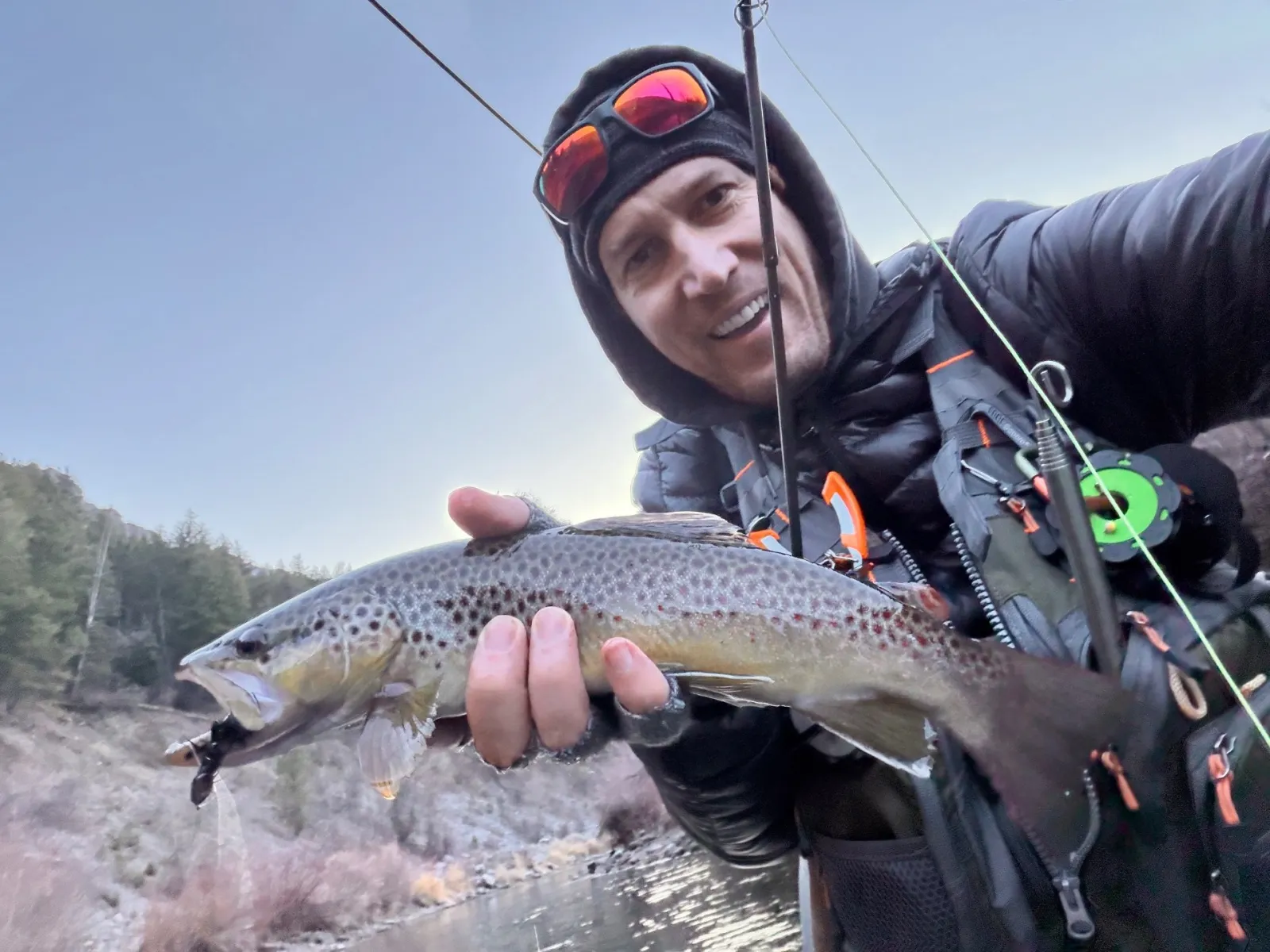
Written by Cameron Spanos
The biggest brown I have ever hooked on the Weber came from a seam no wider than my forearm, tucked against an undercut bank that had been hidden under high water all spring. He ate a sculpin pattern on the swing and broke me off in a willow root before I got a hand on him. That fish lives in my head rent-free, and he is the reason I keep going back to the tailwater below Rockport Reservoir instead of driving another twenty minutes to the Provo.
If you are hunting Weber River brown trout with realistic ambitions of a trophy, the stretch between the Rockport spillway and Echo Reservoir is the answer. Lower fish density than the Middle Provo, more trophy potential than the upper freestone, and a Walk-In Access program that quietly makes one of the most private rivers in Utah surprisingly fishable.
Here is what actually works.
Why the tailwater below Rockport grows bigger browns
The Middle Weber begins at the Rockport Dam spillway and runs roughly 9 miles through ranch country to the head of Echo Reservoir. According to Visit Utah's river guide, this is "by far the most productive section of the river," and the Walk-In Access points named Creamery Lane and Spring Chicken are the ones every guide will mention if you ask twice.
Two things make this water fish bigger than the upper river:
- Stable, cold tailwater releases. Water leaves Rockport from depth and stays cold and oxygenated through the summer when the freestone water above the reservoir is too warm to fish ethically.
- Naturally reproducing wild browns. This is not a stocked river. The browns are stream-born, and the population skews toward fewer-but-larger fish the closer you get to Echo.
That density tradeoff matters. You will not catch numbers here the way you do on the Middle Provo. A good day is four or five fish. A great day is one fish over twenty inches. If you came for a fish-every-cast experience, drive south.
Walk-In Access: Creamery Lane, Spring Chicken, and the parts nobody talks about
Almost the entire Middle Weber runs through private ranch land. The river is legally navigable, meaning if you are in the streambed you are not trespassing, but getting to the streambed without crossing private property is the trick. The Utah DWR's Walk-In Access (WIA) program is the answer.
You request a free WIA permit number through the Utah DWR website. It takes about three minutes. They text or email you a code, and that code unlocks access at marked ladders and gates along the fence line. Without it, you are trespassing the moment you cross a barbed wire.
The named access points
Creamery Lane is the most popular WIA on the Middle Weber. It sits between Wanship and Coalville and gives you about a half-mile of fishable water in either direction once you are in the riverbed. The riffle-pool-riffle structure here is classic, and the deep pool at the upstream end of the access has held the same large brown for what feels like three seasons running.
Spring Chicken is downstream, closer to Coalville. Less foot traffic, more cottonwoods, more undercut banks. This is where I would go on a Saturday in June if I wanted any chance of solitude.
There are six or seven other ladder accesses scattered between these two anchors. The DWR fishing planner map shows them all. The unwritten rule: if a truck is already parked at a ladder, drive to the next one. Walk a half mile from the ladder before you start fishing. Most pressure dies within a hundred yards of the access.
What flow should I fish the Weber at?
This is the question that determines whether your day is good or whether you are wasting gas.
You might also enjoy: Best All-Around Trout Fly Rod 2026: Sage R8 Core vs Orvis Helios vs Scott Centric vs Douglas Sky G
Pull up the USGS gauge at Wanship before you leave. The optimal wading window on the Middle Weber sits between 120 and 350 CFS, according to flow guides from Trout Bum 2 and Fly Guys n' Lies. Below 120 the holding water collapses and fish stack into a handful of pools. Above 350 you cannot cross safely and most of the fish push tight to the banks.
Realistically, here is what each window looks like:
- Below 80 CFS (late summer/winter): Trout Bum 2's October 2025 report logged the river at roughly 30 CFS at winter levels. Fish stack hard, pressure spikes, water temps swing. Many guides simply stop running trips. If you go, fish at dawn and move on after a fish or two from any given pool.
- 120 to 200 CFS: The sweet spot. Wadeable everywhere, every seam holds a fish, and a sculpin streamer on a sink-tip will get attention.
- 200 to 350 CFS: Still fishable but stick to the inside of bends and the slower seams. Indicator nymphing shines.
- Above 350 CFS (peak runoff, typically late May through mid-June): Skip the Middle Weber and fish the upper river or the Provo until it drops back.
One thing the flow charts will not tell you: the Rockport bottom-release schedule shifts week to week based on irrigation calls. A river that ran 180 CFS Tuesday can be at 90 by Friday. Always re-check the gauge the morning of.
Hatches and what to throw, by month
The Middle Weber has a real bug schedule, but it is not a dry-fly river the way the Henry's Fork is. Plan to nymph 80% of the time. The dry game is concentrated into a few short windows.
March through April: pre-runoff nymphing
BWOs and midges. Run a tandem nymph rig with a #18 olive Pheasant Tail or a #20 zebra midge under a smaller indicator. Sowbugs in #16 to #18 are a year-round confidence fly here. Add a #20 Frenchie as your dropper if the lead bug is not pulling weight.
May: Mother's Day caddis
The single best dry fly window on the Weber. Black-bodied caddis in #16 to #18 come off in absurd numbers, usually in the last hour of light. The hatch can get blown out by spring runoff in heavy snow years, so watch the gauge: if it is climbing past 350, you missed it. Pre-runoff in late April is often a better bet than "actual" Mother's Day.
Late June through July: PMDs and golden stones
Once flows drop back into the 150 to 250 range, PMDs hatch midday and golden stones rattle the willows. A #14 Chubby Chernobyl with a #16 PMD nymph dropped 18 inches off the bend hook is the dry-dropper that works here. Fish it tight to the bank rather than mid-river. The undercut banks are where the better fish live.
August through September: terrestrials and sculpins
Hopper fishing tight to the willows pays off, especially after a warm afternoon when grasshoppers get knocked into the seam. The bigger play, though, is streamers. Strip a black or olive sculpin pattern through the deep slots on a sink-tip. According to one Trout Bum 2 report, baby brown fry start emerging from the redds in late spring, and matching that profile with sparser, smaller streamers (#6 to #8) outproduces the giant articulated stuff most of the year.
October through November: spawning season
Browns spawn here in October and early November. Do not wade through gravel beds with cleaner stones than the surrounding substrate. Those are redds, and stepping on them kills the eggs. Fish the deeper runs and pools above and below redds, not on top of them. Honestly, if you cannot tell what a redd looks like, this is the month to go fish the Provo instead.
Tactics that catch the bigger browns
Here is the contrarian opinion you came for: most anglers on the Middle Weber are nymphing too shallow and stripping streamers too fast.
The big browns sit deeper than people think. On a 5-foot-deep run, your indicator-to-fly distance should be at least 7 feet. If you are not occasionally bumping bottom, you are above the fish. Add tungsten beads and split shot until you tick rocks every fourth or fifth drift.
You might also enjoy: Best Fly Reels for Trout Under $300 (2026): 3 Picks I'd Actually Buy
For streamers, slow down. Way down. A Weber brown that has seen ten flies a day will follow a fast-stripped streamer to the bank and refuse it. A dead-drift swing with a sculpin pattern, mended to keep it broadside in the current, gets eats from fish that ignored the same pattern stripped aggressively. Pause for two seconds at the end of every swing before you pick up. That hangdown moment is when half of my best Weber fish have eaten.
Streamer work pairs naturally with a log of your catches and conditions so you can start to see which water temps and flows produce. The browns I land here cluster in a narrow window: water temps between 50 and 58, flows between 140 and 220. Outside that, I switch to nymphs and stop expecting trophies.
Are there special regulations on the Weber River?
Yes. The Middle Weber between Rockport and Echo has artificial-fly-and-lure-only regulations on segments, and the Utah DWR maintains seasonal closures around critical brown trout spawning habitat (typically in tributaries and known spawning reaches) from October into early winter. The exact boundaries shift, so check the current Utah Fishing Guidebook on the DWR website before you go. Statewide brown trout limits apply outside of the closure areas, but most regulars on this stretch fish strictly catch-and-release. The browns here reproduce naturally without supplemental stocking, and the population cannot absorb harvest pressure the way a put-and-take river can.
One more thing: the river is legally navigable, but trespass enforcement on the surrounding ranch land is real. Stay in the streambed. Do not duck under fences. Do not walk the bank to reach a different access. The WIA program exists because of a fragile relationship between landowners and anglers, and one bad actor can shut down a ladder for everybody.
The case for fishing the Weber over the Middle Provo
The Provo is the famous one. It gets the magazine covers, the guide trips, the Instagram posts. The Weber gets the leftover pressure.
That is the trade. You will catch fewer fish on the Weber than on a comparable day on the Middle Provo. But the average size will be larger, you will see fewer other anglers, and on a good day a 20-inch wild brown is a realistic outcome rather than a daydream.
If you fish the Provo regularly and you have not given the Middle Weber three honest tries, you are leaving the bigger browns on the table.
Quick-reference planning
Before you go: pull the Wanship USGS gauge, request a WIA code from Utah DWR, check the current fishing guidebook for any active spawning closures, and look at a 5-day forecast for water temps. Pack a 9-foot 5-weight for nymphing and a 9-foot 6-weight or 7-weight if you intend to throw heavier streamers.
Park at Creamery Lane or Spring Chicken, walk at least a quarter mile from the ladder before your first cast, fish slowly, and treat every undercut bank like a potential trophy lie. Most of them are.
Track what you see. Flows, water temps, hatch density, which seam ate the streamer. Bushwhack exists to make that easier than scribbling notes on the back of a leader card. Three trips of decent records will teach you more about this river than any blog post, including this one.
Get fishing tips in your inbox
New guides, seasonal tactics, and gear picks — about once a month, no spam.