Night Fishing for Bass: The Beginner's Guide to Fishing After Dark in May and June
 Hudson Reed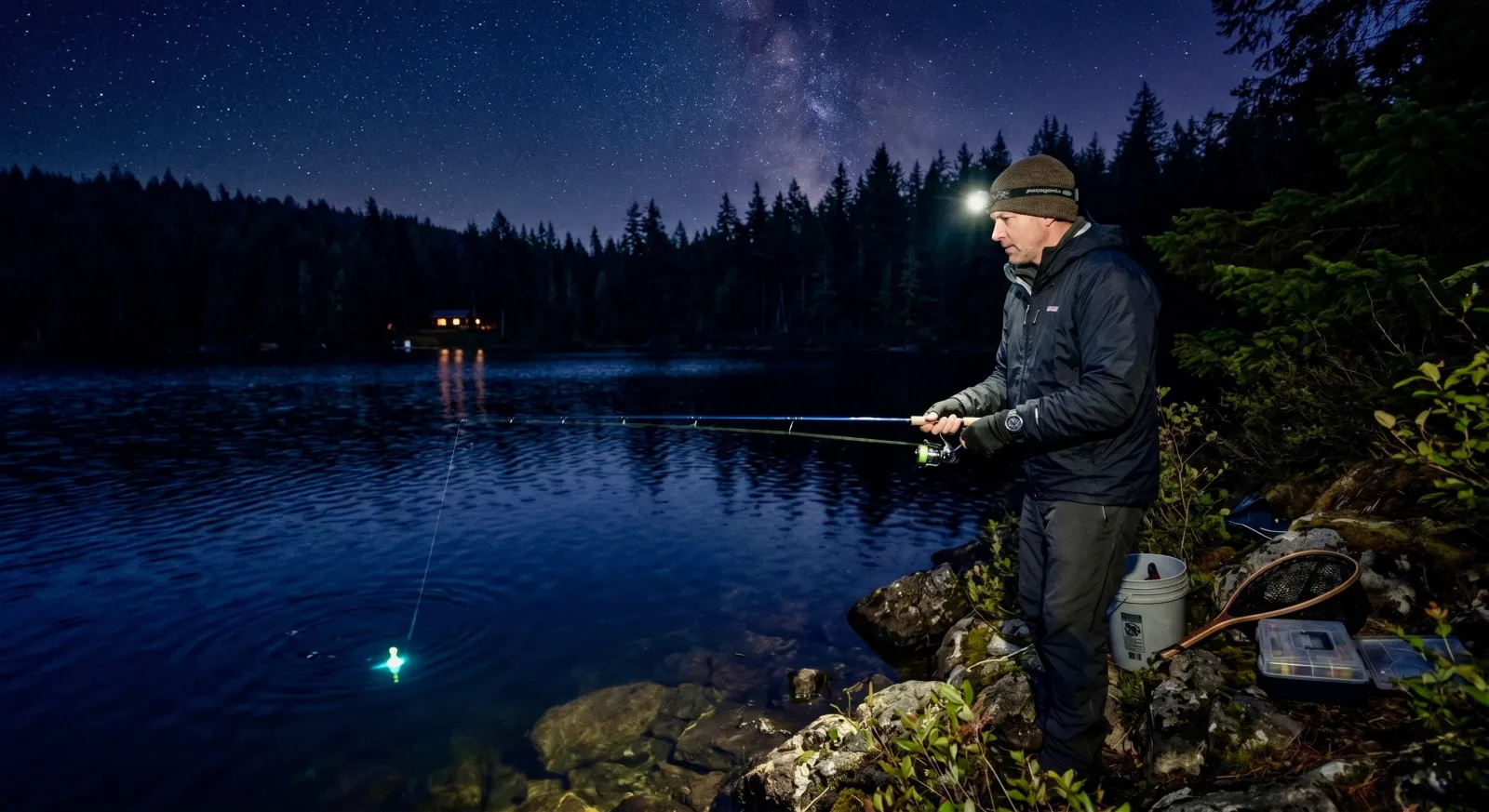
Written by Hudson Reed
By late May and into June, the midday bass bite on a lot of waters gets tough. The sun is high, the water is warming, and fish push deep. But come sunset, something shifts. Night fishing for bass is one of the most productive — and most overlooked — tactics of the season, especially for beginners who want to avoid boat traffic and fish for bass that are actually shallow and actively feeding.
Why Bass Fishing at Night Works So Well in May and June
Bass are ambush predators with excellent low-light vision. As water temperatures climb into the upper 70s and 80s during summer days, shallow bass become lethargic and hard to catch. But once darkness falls, the shallows cool slightly, baitfish become vulnerable, and bass move up to feed aggressively. The same fish that ignored your lure at 2 PM will destroy it at 10 PM.
Night fishing also gives you a practical advantage: less boat traffic, calmer water, and less pressure on popular spots. Docks, laydowns, and shallow points that are hammered all day by other anglers become fresh territory after dark.
Where to Find Bass at Night
Bass don't randomly scatter at night — they move from daytime structure to nearby shallow feeding areas with predictable patterns:
- Docks with lights: Dock lights attract plankton, which attract baitfish, which attract bass. This is the single best night fishing target on any lake with residential docks. Cast along the shadow line — the edge where the light meets the darkness. Bass position right at that boundary to ambush prey moving into the light.
- Shallow flats near deep water: Points and flats that drop into 10+ feet are prime. Bass use the deep water as a refuge during the day and slide up onto the flat to feed after dark.
- Laydowns and wood: Bass feel comfortable relating to hard structure in the dark. A fallen tree in 2–5 feet of water that held zero daytime fish can be loaded with active bass at midnight.
- Rocky banks and chunk rock: Heat-absorbing rocks stay warm into the night and hold crayfish that bass feed on heavily after sunset.
Mark your best night spots in Bushwhack — consistent night bass spots are some of the most reliable locations in your arsenal and worth revisiting all summer long.
Best Lures for Night Bass Fishing
Night fishing for bass requires a shift in thinking. Sound, vibration, and silhouette matter far more than color. Bass are tracking your lure with their lateral line as much as their eyes. Dark colors create a cleaner silhouette against the night sky — black, junebug, and dark blue outperform natural patterns after dark.
You might also enjoy: Spring Crappie Fishing Tips: Ice-Out to Spawn
Spinnerbait with a Colorado Blade
This is probably the most popular night bass lure for good reason. A single large Colorado blade produces maximum thumping vibration that bass can feel from a distance in total darkness. Go heavy — 1/2 to 3/4 oz — and slow roll it just above the bottom. All-black is the classic color, or use a black skirt with a white or red trailer for contrast. Slow down more than you think necessary.
Big Worm (Texas Rig)
A 10–12 inch ribbontail worm in black or junebug, Texas-rigged on a 3/0 hook with a 1/4 oz bullet weight, is one of the deadliest night bass baits ever made. Drag it slowly along the bottom, focusing on the transition from flat to drop-off. Bass will often pick it up so subtly you won't feel it — keep light tension on the line and watch for any movement or heaviness. Log your big-worm catches in Bushwhack to find patterns in depth and location over time.
Jitterbug or Walking Topwater
The Arbogast Jitterbug — a lip-cupped topwater that creates a rhythmic, hypnotic gurgle — was practically designed for night fishing. Cast it out, retrieve it slowly and steadily, and let the sound do the work. The strike in the dark will make you jump out of your seat. A walking bait like a Spook also works well on calm nights over shallow flats.
Football Jig
For fishing deeper structure — points, humps, roadbeds — a heavy football jig with a bulky craw trailer gives bass something substantial to eat. Drag it slowly along the bottom. The rattling, thumping, and water displacement trigger bites in total darkness.
Night Fishing Safety: What Beginners Need to Know
Night fishing is fun but demands extra preparation. Don't skip these basics:
You might also enjoy: How to Catch More Fish After a Bad Trip: Turn Slow Days Into Data
- Wear your life jacket: This is non-negotiable after dark. Even strong swimmers get disoriented in the water at night, and cold water in spring can cause muscle failure within minutes.
- Use a red headlamp: Red light preserves your night vision and is far less likely to spook fish. Never shine a white light on the water where you're fishing.
- Running lights on the boat: Required by law and essential for safety. Verify they work before you leave the dock.
- Tell someone your plan: Let a person onshore know where you're going and when to expect you back.
- Pre-organize your gear: Set up your rods before dark. Fumbling with tackle in complete darkness on a boat is how accidents happen. Know where everything is.
- Bring bug spray: Late May and June nights are prime mosquito season in most of the country. A can of DEET will make the difference between a great night and a miserable one.
Simplify Your Tackle for Night Fishing
One of the best pieces of advice for beginner night anglers: bring fewer rods, not more. Rigging up in the dark is frustrating, and a tangled mess of rods in a moving boat is a hazard. Pick two or three setups — a spinnerbait, a big worm, and a topwater — and master those. You don't need ten rods. You need confidence in three.
Heavier line helps too. If you typically fish 10 lb fluorocarbon during the day, bump up to 12–15 lb at night. You won't get as many shy-bite refusals after dark, but you will occasionally hook a big fish near heavy cover in total darkness — and you'll want the extra strength.
The Best Night to Go
Plan your first night fishing trip around a full or near-full moon. The added ambient light makes everything easier — navigation, landing fish, re-rigging. Some anglers prefer new moon nights for the darkness (bass can't see you), but for a beginner, a bright moon night makes the whole experience far more manageable and enjoyable.
Start close to the dock your first time out. Pick one or two spots you know well from daytime fishing, set up before dark, and let the night come to you. Once you're comfortable with the sounds and rhythms of fishing in darkness, you can start exploring.