Western Green Drake Hatch 2026: Madison, Henry's Fork, and Yampa Trip-Planning Guide
 Cameron Spanos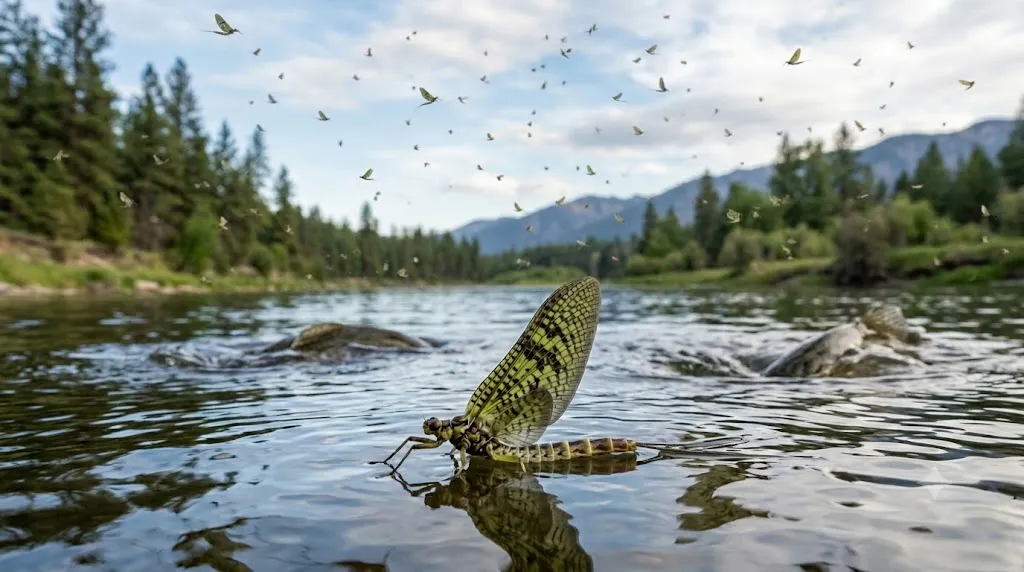
Written by Cameron Spanos
The bigger a trout gets, the less it likes to chase. That's why a 20-inch brown that ignored your size 16 PMD for three drifts will turn and move two feet for a Western Green Drake. The bug is enormous by mayfly standards (a size 10 or 12, 13 to 20 millimeters according to Troutnut's profile of Drunella grandis), it emerges in slow lanes where big fish actually live, and it bumbles around on the surface like it owes the river money.
This is the hatch trophy hunters plan vacations around.
Today is May 15, 2026, and we're four to six weeks out from the heart of the Western Green Drake hatch on the three rivers that matter most: the Madison between Hebgen and Quake, Idaho's Henry's Fork through Harriman State Park, and Colorado's Yampa above and below Stagecoach. The runoff signal will sharpen over the next three weeks, but the broad timing window is already clear enough to book lodging.
Why the Western Green Drake is the hatch trophy trout actually move for
Trout decisions are economic. A 22-inch fish burns a measurable percentage of its daily calorie budget every time it slides out of cover, so it ignores small mayflies that drift past at a rate of one bug every thirty seconds. A drake hatch breaks that math. The insects are huge, they emerge slowly, and they sit on the film forever trying to dry their wings. Troutnut notes that the duns "take an exceptionally long time to get airborne once they break through the surface, and they may make several clumsy attempts."
That clumsy emergence is the entire reason the hatch matters. A PMD pops off the water in under a second. A drake is a hovering buffet.
The other piece is conditioning. Western fish see the same drake silhouette for two to four weeks every summer. By the time the hatch peaks, even fish in pressured water are eating with confidence, which means Harriman Ranch trout that wouldn't look at a hopper in August will eat a well-presented drake in the open. Bushwhack users logging trips through these rivers in late June consistently show larger average fish lengths than any other window outside the salmonfly hatch.
2026 timing window, river by river
Western green drakes emerge when water temperatures hit 50 degrees and peak between 55 and 60, according to the Troutnut species profile. That temperature signal is what drives the calendar variance from year to year. Here's where each river sits in 2026.
Henry's Fork: Harriman State Park (Railroad Ranch)
Open the gates June 15. Plan to fish June 22 through July 10.
The Ranch section opens June 15 every year and the drake hatch typically starts within days. Henry's Fork Lodge's own fishing calendar puts the start at "about the third week of June," with the average kick-off date around June 22. The hatch typically begins around 11 a.m. and runs an hour or two on bluebird days, but stretches into the afternoon when it's cool and cloudy.
The Ranch is the hardest dry-fly water in the Rockies. Flat, glassy, currents that pull thread-fine tippet around in a dozen directions. Bring 6X minimum, 12-foot leaders, and accept that you will refuse fish all day rather than line a single one.
Madison River: between Hebgen and Quake Lake
The Madison's drake hatch is concentrated in the upper reaches, with the densest emergence in the "between the lakes" stretch. Most guide reports put the window from late June through mid-July. The drake comes on as the salmonfly hatch winds down, so if you're already planning a salmonfly trip in mid-June, extend your stay another week.
The upper Madison from Raynold's Pass to Storey Ditch holds the most consistent drake numbers in southwest Montana. Density drops as you move down toward Ennis. Fish the riffles and the soft pockets behind big boulders. The Madison's drakes lean toward late morning to early afternoon emergence on warm days, evening on cool ones.
Yampa River: above and below Stagecoach Reservoir
Mid-June to early July for the lower river. Late June through late July as you push upstream into higher elevation.
You might also enjoy: Middle Provo River Wade Fishing: Access, Parking, and Hatches Mile by Mile
The Yampa is the most variable of the three because the river spans a 4,000-foot elevation change from Steamboat down to Cross Mountain. Western green drakes start mid-June at lower elevations and continue into late July higher up. The Stagecoach tailwater fishes earliest. Town section through Steamboat peaks late June. The Sarvis Creek wilderness reaches and the upper river above Stagecoach run a week or two later.
What does runoff do to the 2026 window?
Snowpack in the Madison and Henry's Fork basins is running close to median as of early May 2026 per NRCS SNOTEL data, which suggests a normal-to-slightly-late runoff peak. The Yampa basin is running a bit below median, which usually means cleaner water sooner. None of this changes the headline dates by more than a few days. If runoff stretches long, the lower-elevation drakes get clipped on the front end; if it crashes early, you get a longer window. Watch USGS flow gauges in the second week of June for the inflection.
The only three fly stages that matter
You can carry forty drake patterns. You'll use three.
Cripples and stuck-shuck emergers
This is the box that wins on the Ranch. Drakes emerge underwater, climb to the surface, and then have to wrestle out of the nymphal shuck while their wings unfold. A lot of them never make it. Those half-emerged bugs, riding low with the shuck trailing, are easier for a big trout to eat than a finished dun that's about to fly off.
Carry Quigley Cripples and Last Chance Cripples in size 10 and 12. If you only buy one drake pattern for Henry's Fork, buy a Last Chance Cripple in 12.
Parachute and Comparadun duns
The standard high-floating dun. Parachute Green Drake in size 10 for faster water, Comparadun or CDC dun for slick flats. Buy them in olive-bodied versions with a yellow or chartreuse rib (the body color matches the live insect for the first 30 seconds of its life, which is when fish hit it).
Troutnut points out that the freshly emerged duns are bright green and dull to a ruddy brown within minutes. If you're hand-tying or buying, the bright fresh color is the one that triggers eats.
Spinners
Drake spinner falls happen in the evening, usually within two days of the heaviest dun emergence. Big rust-bodied spinners, hackle-tip wings, size 10 or 12. Fewer anglers fish the spinner fall because the dun emergence already sent everyone home, and that's exactly why the spinner fall produces the biggest fish of the trip on the Madison and the Yampa.
What weather kills a drake day, and what makes one
The popular wisdom says cool and cloudy is best. That's mostly right but the nuance matters.
Drakes like a stable barometer and rising air temps in the 60s and low 70s. Overcast skies extend the emergence window from a single 90-minute pulse into a three- or four-hour event. Light drizzle is fine. Sustained rain shuts it down.
What kills a day:
- A cold front passing through in the morning. Pressure crashes, the bugs sit on the bottom, and the fish stop looking up.
- Bluebird sun and air temps above 80. The emergence compresses to a 45-minute window around midday and you miss most of it driving to the river.
- Sustained wind over 15 mph. Drakes can't fly off the water cleanly, but fish also can't see them on the chop and the whole presentation game breaks down.
What makes one:
- Two warm sunny days followed by a cool overcast morning. The warm days raise water temps into the trigger range, the cool overcast extends the window.
- Air temps in the high 50s to low 70s with broken clouds.
- Water temps right at 55 degrees first thing in the morning. Carry a thermometer. If you wade in and the river is sitting at 52 at 9 a.m., the hatch will be late and probably weak. If it's 56, get rigged up.
How do you fish to picky drake-eating trout?
Big drakes get the biggest fish in the river up off the bottom, and those fish did not get big by eating sloppy presentations. Three things solve most refusals.
You might also enjoy: Weber River Brown Trout: Where to Find Trophy Browns Below Rockport
First, drop tippet size. 5X feels light for a size 10 fly but the Ranch and the Yampa town section regularly demand 6X. The 18-inch rainbow refusing your perfect drift on 5X will eat the same fly on 6X.
Second, watch the water film for the answer. If fish are leaving their nose in the air for a full beat after the rise, they're eating duns. If you see backs and tails breaking the surface with no air time, they're eating emergers. If you see splashy aggressive rises in fading light, it's spinners. Match what the rise form is telling you, not what you assume should be hatching.
Third, fish ahead of the fish. The biggest mistake on a drake hatch is casting at the last rise. Wait, watch the fish establish a rhythm (usually a rise every 8 to 15 seconds in a fixed lane), and put the fly two feet upstream of where it will eat next, not two feet upstream of where it just ate. Tracking your catch data across a few drake trips will show you something useful: most of your hookups happened in the second hour of the hatch, not the first, because that's when the fish stop spooking and start eating with confidence.
What rod and leader setup do you actually need?
A 5-weight, 9-foot rod is the right tool for all three rivers. Drakes are big enough that a 4-weight feels under-gunned for windy days on the Madison and 6-weight is overkill for the Ranch. If you fish a slow-action rod (Winston Pure, Scott G-Series, anything in that family), this is the hatch you bought it for. The presentation tax on the Henry's Fork rewards rods that lay down soft.
Leaders should run 12 feet for the Ranch and the Yampa town section, 9 feet on the Madison where the riffles forgive a heavier landing. Tippet 5X to 6X. Carry both. If you're a slow knot tier, learn a quick blood knot before the trip because you'll be changing tippet several times a day.
Where do you stay, and how should you book it for 2026?
Last Chance, Idaho for the Henry's Fork. The town is six buildings and a fly shop, but Henry's Fork Anglers and TroutHunter both have lodging and they book up by late winter. As of mid-May 2026 there's still some weekday availability in late June; weekend dates from June 20-28 are gone. Try Island Park if Last Chance is full.
For the Madison, West Yellowstone is the obvious base for the between-the-lakes stretch. Ennis is better if you want to also fish the lower river on slower drake days. Both have lodging through June.
For the Yampa, Steamboat Springs has the most options but you'll pay for them. Oak Creek and Stagecoach State Park (which has cabins and camping) are cheaper bases and put you closer to the Stagecoach tailwater.
Book guides before lodging, not after. The good drake guides on all three rivers fill late-June dates by March. If you're reading this in mid-May with no guide booked, call shops directly and ask about cancellations.
One contrarian take before you go
Most online hatch advice tells you to fish the dun. The dun is what people photograph and what fly shop displays show.
The cripple eats better.
If you spend a drake trip refusing to throw anything but high-floating dun patterns, you will leave fish on the table. The cripple sits low, doesn't blow off the water, and represents what most drakes actually look like during emergence. Last Chance Cripple in size 12. Buy a dozen. Lose six. Catch your biggest fish of the trip on the seventh.