How to Start a Fishing Log: Complete Guide for 2026
 Cameron Spanos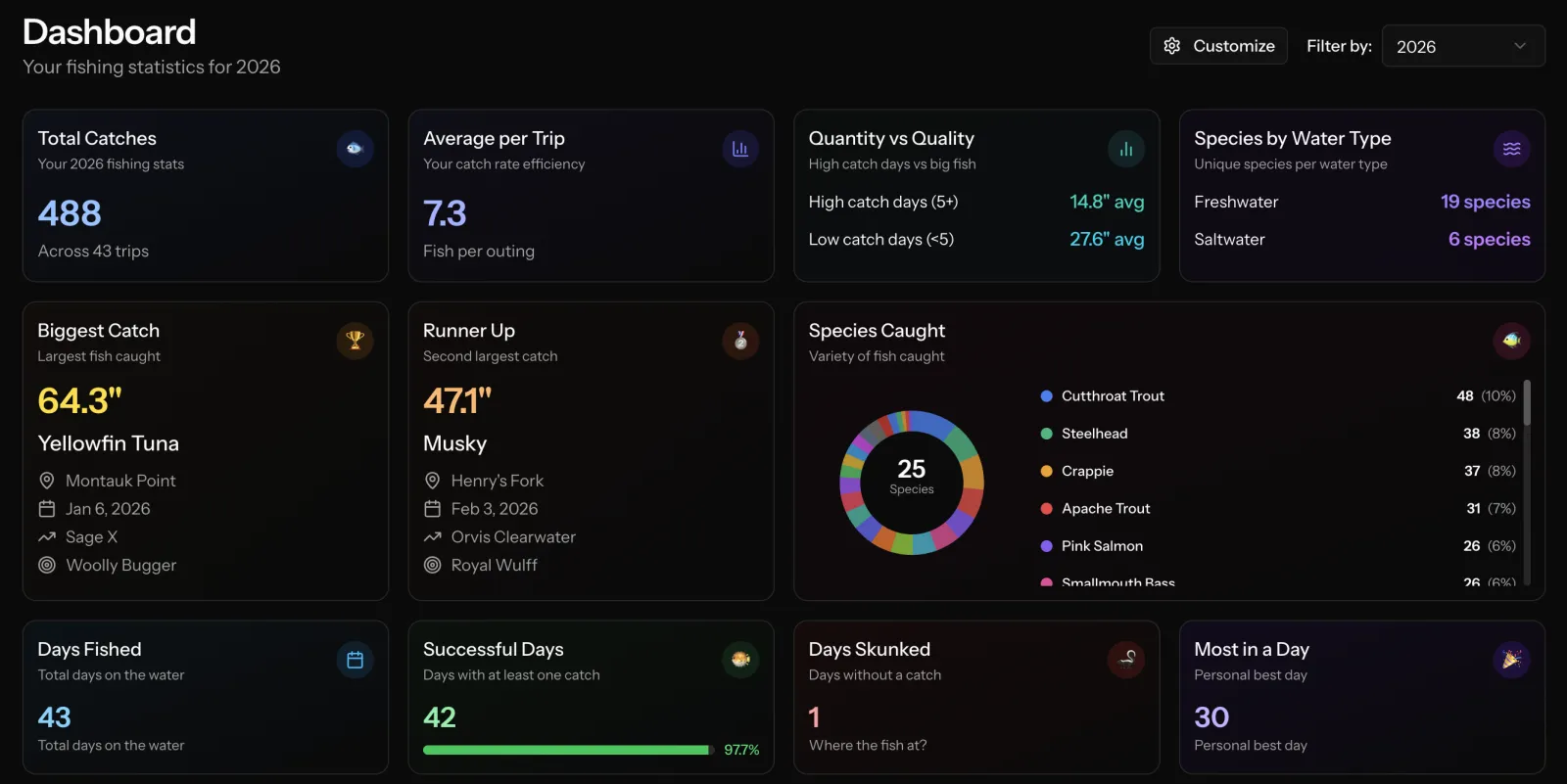
Written by Cameron Spanos
Whether you're a social fisher and only go with friends every so often or a serious fly fisher, tracking your catches, conditions, and patterns is the fastest way to improve your success rate. Reading through these helpful tips you learn why I love to keep track of my fishing trips and track data using a fishing log. Log your trip, see your patterns, and catch more fish.
Why Keep a Fishing Log?
Before we dive into the how, let's talk about the why. A fishing log helps you:
- Identify patterns in successful catches (time of day, weather, moon phase)
- Track your progress and celebrate personal bests
- Remember productive spots and what worked there
- Analyze what gear produces the best results
- Build a personal database of local fishing knowledge
- Share experiences with friends and the fishing community
Studies show that anglers who track their catches have a 40% higher success rate than those who don't. That's not luck—that's data.
What Should You Track?
The key to a useful fishing log is tracking the right information without making it overwhelming. Here are the essential metrics:
Core Information
- Date and time - When did you fish?
- Location - Where exactly were you?
- Species caught - What did you catch?
- Size - Length and weight (if possible)
- Quantity - How many fish?
Environmental Conditions
- Weather - Temperature, conditions, wind
- Water conditions - Temperature, clarity, flow
- Moon phase - Surprisingly important for many species
- Time of day - Dawn, morning, afternoon, dusk, night
Gear & Technique
- Rod and reel - What setup did you use?
- Line type and weight - Important for fly fishing
- Flies or lures - What actually worked?
- Technique - How were you fishing?
Optional But Valuable
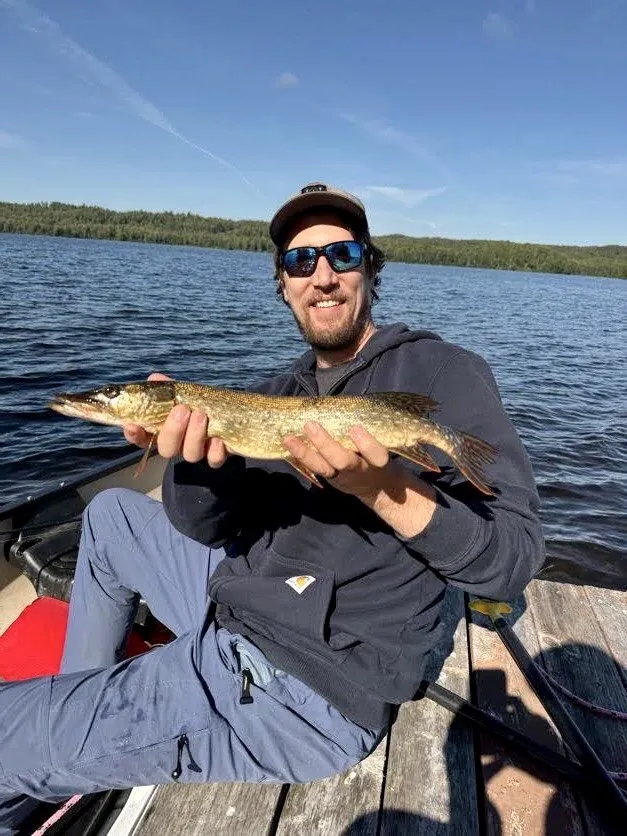
- Photos - Visual records are invaluable
- Friends - Who were you fishing with?
- Notes - Observations, lessons learned, memorable moments
- Season - Spring, summer, fall, winter patterns
Digital vs. Paper Logs: The 2026 Reality
Let's be honest—paper logs are romantic, but they're not practical in 2026. Here's why digital wins:
Paper Logs:
- ✗ Hard to search and analyze
- ✗ Can get wet, lost, or damaged
- ✗ No photos or GPS coordinates
- ✗ Can't share easily
- ✗ No pattern analysis
Digital Logs:
- ✓ Instant search and filtering
- ✓ Cloud backup (never lose data)
- ✓ Photo storage with each entry
- ✓ GPS location tracking
- ✓ Automatic pattern analysis
- ✓ Share with friends
- ✓ Track achievements and badges
- ✓ Weather data integration
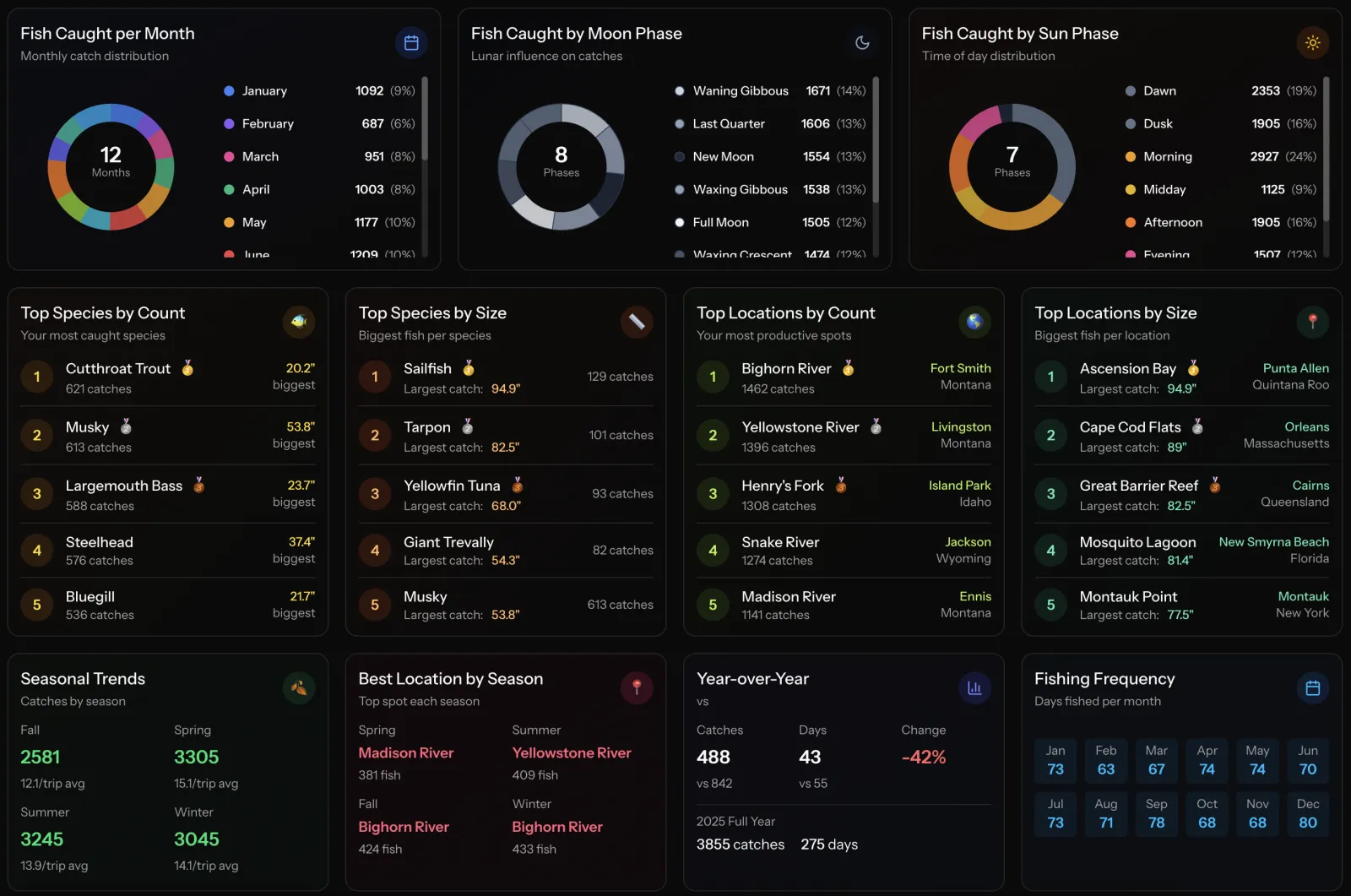
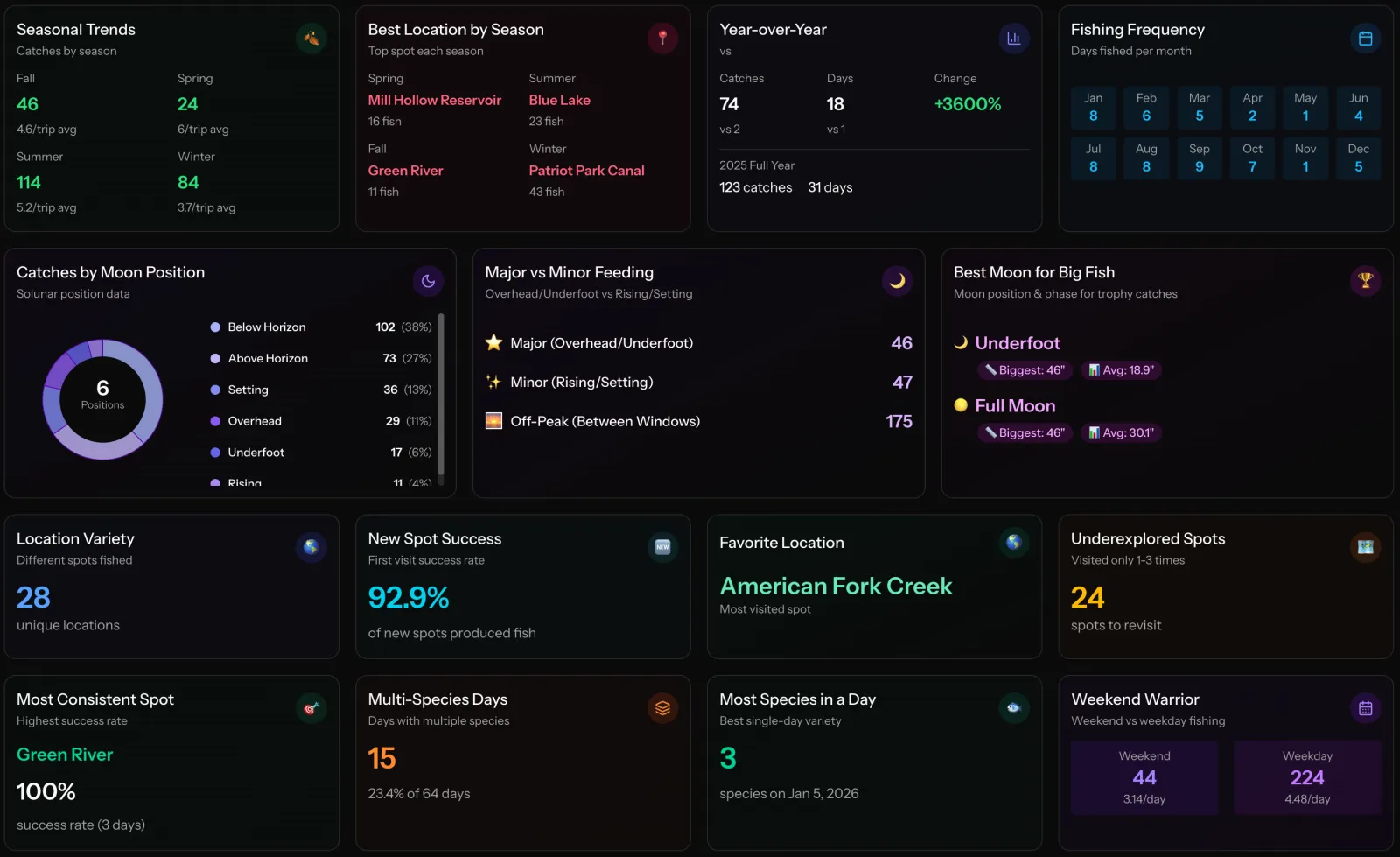
Bushwhack Fishing can automatically calculate moon phases, track your personal bests, analyze your most productive times, and even help you discover patterns you'd never notice manually.
How to Start Your Fishing Log Today
Step 1: Choose Your Method
Bushwhack fits your needs:
- Easy mobile entry (you're logging from the water)
- Photo support
- Weather and moon phase tracking
- Analytics and pattern recognition
- Social features to share with friends
Step 2: Log Your First Trip
Don't overthink it. After your next fishing trip, record:
- Where you went
- What you caught (or didn't)
- What conditions were like
- What gear you used
- One photo
That's it. You've started.
Step 3: Build the Habit
The key is consistency. Log every trip, even the slow ones. Those "bad" days often reveal important patterns:
- What conditions to avoid
- When fish aren't biting
- What doesn't work
Step 4: Review and Learn
Once a month, review your logs:
- What patterns do you see?
- What's your most productive time of day?
- Which locations produce the most fish?
- What flies or lures work best?
- How does weather affect your success?
Advanced Logging Tips
Once you've built the habit, level up your logging:
Track Personal Bests
Record your largest fish by species. Watching these numbers grow is incredibly motivating.
Use Tags and Categories
Organize trips by type: practice sessions, tournaments, guided trips, solo adventures.
Add Detailed Notes
Your future self will thank you. Note:
- Hatch activity
- Water levels
- Unusual observations
- Lessons learned
- What you'd do differently
Share Selectively
Share your successes (and failures) with friends. The fishing community learns together.
Set Goals
Use your log to set and track goals:
- Catch 50 fish this season
- Land a personal best
- Try 10 new locations
- Master a new technique
Common Mistakes to Avoid
1. Logging only successful trips
Bad days teach you as much as good ones. Log everything.
2. Too much detail
Don't spend 30 minutes logging a 2-hour trip. Keep it simple and sustainable.
3. Waiting too long
Log immediately or within 24 hours. Memory fades fast.
4. Not including photos
A picture is worth a thousand words—and helps you remember details.
5. Never reviewing your data
A log is useless if you don't learn from it. Review monthly.
The Bottom Line
Starting a fishing log in 2026 is easier than ever, and the benefits are undeniable. You'll catch more fish, remember more trips, and become a better angler.
The best time to start was your first fishing trip. The second best time is today.
Ready to start your fishing log? Bushwhack makes it effortless to track every catch, analyze patterns, and level up your fishing game. Don't let another trip go unrecorded. Bushwhack also helps you connect with friends. You can compare stats and compete for a spot on the leaderboard. Fishing is fun and logging your trip should be too. I have added lots of fun badges for you to earn. We also celebrate when you get a new personal best or catch a new species. Join the Bushwhack community for free today.
What's your biggest challenge with keeping a fishing log? Share in the comments below!