Kayak Fishing Starter Guide: What to Know Before You Launch
 Hudson Reed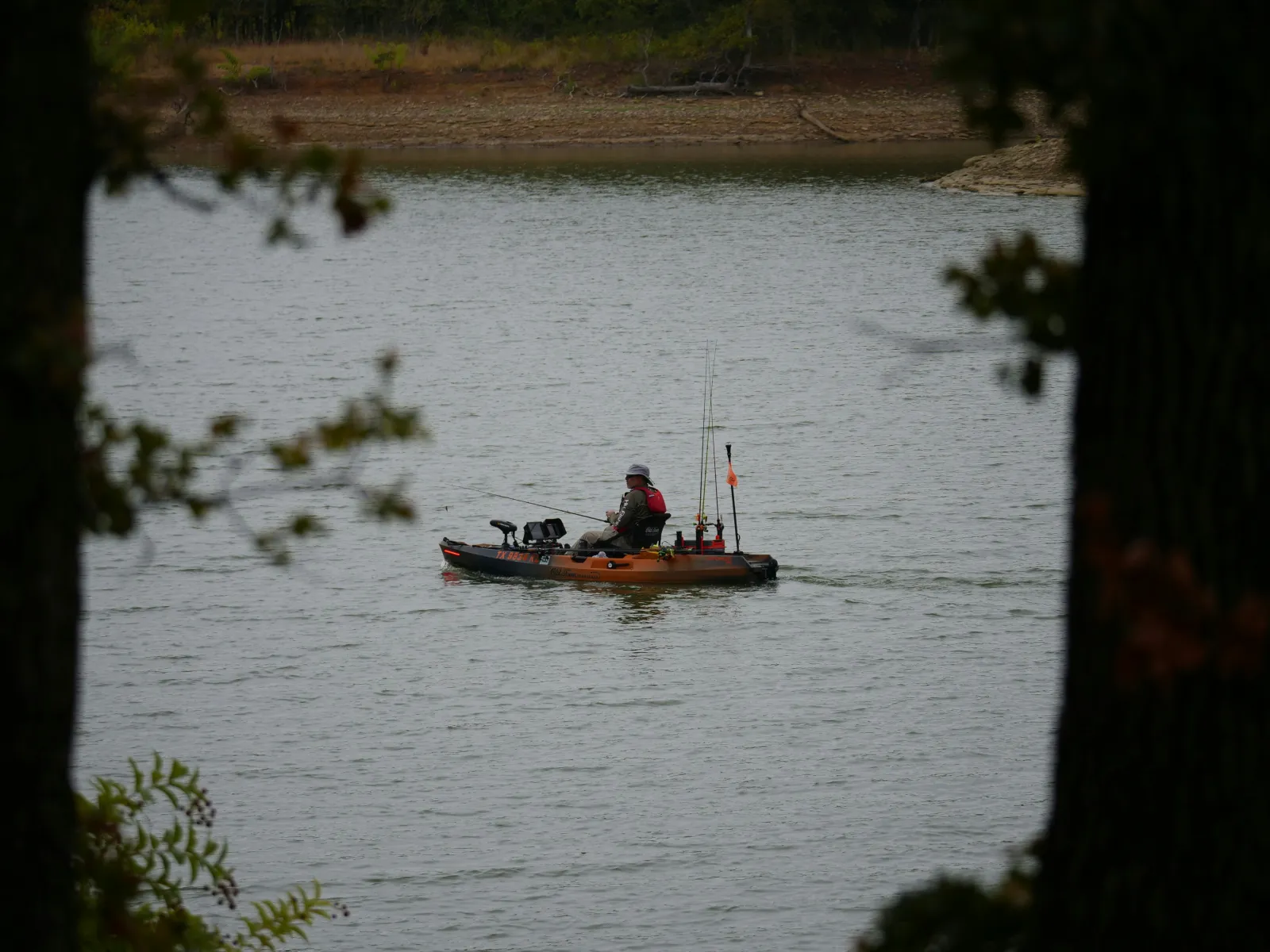
Written by Hudson Reed
There is something different about the moment you slip a fishing kayak off a bank and into still water before sunrise. No trailer ramp politics, no engine noise — just you, a paddle, and access to water that bigger boats will never reach. Kayak fishing rewards anglers who are willing to learn the setup, and this kayak fishing starter guide will walk you through every decision you need to make before you launch: hull selection, rigging for stability, electronics mounting (including forward-facing sonar), safety gear, and why a fishing log might be the most underrated tool in a kayak angler's kit.
How to read water finding fish without electronics
Choosing Your Hull — The Foundation of Everything
Every decision you make about rigging, electronics, and gear flows downstream from your hull choice. Get this right and everything else gets easier.
Flat-Bottom, Pontoon, and V-Hull: What the Difference Actually Means
Hull shape determines two types of stability. Primary stability is how steady the kayak feels when it is sitting flat on calm water — critical for casting, reeling, and reaching for gear. Secondary stability is how well it resists capsizing when it leans to one side.
- Flat-bottom hulls offer excellent primary stability and are ideal for calm lakes and ponds. They sit right on top of the water and are the most forgiving for beginners who are still finding their balance.
- Pontoon (tunnel) hulls concentrate buoyancy at the outer edges, giving you a stable platform for standing up to cast — a major advantage if you plan to stand-up fish. Most dedicated fishing kayaks use some variation of this design.
- V-hulls track well and cut through open water efficiently but sacrifice primary stability. Better for covering distance than for sitting still and working a spot.
For most beginners, a sit-on-top kayak with a flat or pontoon hull is the right call. Sit-on-tops give you better access to gear, a higher sight line for spotting fish, and — critically — they are much easier to re-enter if you capsize.
Width, Length, and Weight Capacity
Most fishing kayaks fall in the 30-40 inch width range. Wider is more stable; narrower is faster. For fishing, lean wider. Length affects tracking — longer kayaks hold a line better in wind and current, while shorter ones spin and maneuver more easily in tight cover. Always check weight capacity and subtract your body weight, then calculate how much is left for gear, tackle, batteries, and electronics. Overloading a kayak kills stability.
Rigging for Stability — Keep Gear Low and Centered
The goal when rigging a fishing kayak is simple: put everything you need within reach without raising your center of gravity or cluttering your casting lanes.
Rod Holders and Track Systems
Gear tracks — rails mounted on the gunwales or deck — are the foundation of a modular rigging setup. Brands like Railblaza make StarPort rail mounts that let you slide rod holders, camera arms, and accessory mounts to different positions depending on the day's needs. A classic setup puts one or two rod holders behind you for trolling rods and one within easy reach at the front for active casting. A milk crate in the stern is a time-tested solution for DIY rod holders and extra storage.
Anchor Systems and Drift Socks
A kayak anchor trolley is one of the best upgrades you can make. It runs a small pulley system along the gunwale so you can adjust your anchor attachment point from bow to stern while sitting in the seat — keeping the kayak properly oriented to current or wind without re-anchoring. A drift sock (sea anchor) slows your drift in current or wind and gives you a more controlled presentation, especially in open water. Both together give you the boat control that makes the difference between covering water efficiently and getting pushed around.
Electronics Mounting — From Fish Finders to Forward-Facing Sonar
Kayak fishing electronics have exploded in capability. Even a budget setup dramatically improves how you find and stay on fish.
Standard Fish Finders and GPS Chartplotters
A basic GPS chartplotter with CHIRP sonar lets you read bottom structure, mark waypoints on productive spots, and track your drift lines — all things that are genuinely hard to do reliably without electronics on a kayak. Mount the display near the cockpit where you can glance at it while paddling. Gear track mounts offer the most flexibility. Run the transducer through a scupper hole or use a dedicated transducer arm mounted to the hull side.
Forward-Facing Sonar on a Kayak
Forward-facing sonar (FFS) like Garmin Panoptix LiveScope and Lowrance ActiveTarget lets you see fish — in real time — before your bait reaches them. It has changed kayak bass fishing and inshore saltwater fishing completely. On a kayak, it requires some extra planning:
- Dual displays: Monitoring forward-facing sonar alongside your GPS chartplotter requires two screens. Most serious kayak FFS setups run a dedicated chartplotter and a separate FFS display.
- Mounting: A pole mount from the gunwale gear track is the most common approach. You can also build a DIY PVC pole mount for under $50 that works surprisingly well — inner pipe holds the transducer, outer pipe clamps to the gunwale.
- Power: Demanding FFS setups need twin 12V batteries wired in series. Budget for a lithium battery if weight is a concern — they are significantly lighter than lead-acid.
- Cost: A complete Garmin LiveScope setup (ECHOMAP UHD chartplotter plus Panoptix transducer) starts around $2,000. Budget-friendly FFS alternatives exist, but Garmin's image quality sets the benchmark.
If FFS is out of budget right now, start with a quality GPS chartplotter and add FFS later. The ability to mark waypoints alone is worth the investment.
Safety Gear — Non-Negotiables for Every Launch
Kayak fishing safety experts note that most kayak anglers will face some kind of safety situation during their time on the water. A few dollars of gear and a habit of preparation keeps those situations from becoming emergencies.
- PFD: Required by the U.S. Coast Guard. Wear it — do not just store it on deck. Kayak-specific PFDs are cut to allow paddle movement and often have pockets designed for fishing tools.
- Whistle or horn: Required for signaling. Leash it to your PFD so it is always on you, not in a hatch.
- Orange flag and battery light: Dramatically improve your visibility to motorboats, especially in low light or open water.
- Waterproof phone case: Your phone is your emergency communication and backup GPS. Protect it.
- Float plan: Tell someone where you are launching, where you plan to fish, and when you expect to be back. This is the most underused safety tool in kayak fishing.
- Compact first aid kit: Hooks, blades, and rough gunwales mean minor injuries happen. Be ready.
- Safety leashes: Tether your paddle and rod to the kayak. If you go over, you do not want to watch your gear drift away while you tread water.
Safety gear should be the last thing you cut when you are trying to keep your rig lightweight. All of it together weighs a few pounds and costs very little compared to the alternative.
Why a Kayak Fishing Log Is Your Secret Weapon
Here is a problem that is uniquely painful for kayak anglers: you find a productive drift. Maybe it is a 40-yard lane along a grass edge where the current funnels baitfish. You catch three fish in ten minutes. Then the wind shifts, you paddle off to try something else, and three weeks later you cannot find that line again to save your life.
Bigger boats use chartplotters to mark waypoints and save tracks. Kayak anglers can do the same, but the data only lives in the unit — and it does not capture the conditions that made the spot work. A fishing log closes that gap. Log each session with:
- GPS coordinates or waypoint name for key spots
- Drift direction, speed, and length
- Wind speed, direction, and tide or current stage
- What lure or bait produced and at what depth
- Time of day and light conditions
Over time, patterns emerge that you would never see from memory alone. That grass-edge drift fires on a falling tide with a southeast wind. The anchor spot under the dock only produces in low light. Those are the insights that turn a good kayak angler into a great one — and they only come from structured notes.
Bushwhack is built for exactly this kind of session logging, whether you are chasing bass from a kayak, working inshore flats, or drifting a river. Using Bushwhack to log your kayak sessions from the first launch means you are building a database of your water from day one — not scrambling to remember details three months later.
Launch Ready — Bringing It All Together
The best kayak fishing setup is the one that matches where you fish, how you fish, and what you can realistically manage on the water. Start with the right hull for your primary water type, rig it simply with a track system and anchor trolley, add electronics that match your budget (even a basic GPS chartplotter is a game-changer), and treat safety gear as mandatory equipment, not optional weight.
Then start logging. The anglers who catch the most fish from a kayak are not necessarily the ones with the most expensive electronics — they are the ones who pay attention, take notes, and go back to what worked. Bushwhack makes that habit effortless. Download it before your first session and let your data start working for you from launch one.