Dry Dropper Rig Setup: A Complete Beginner's Guide
 Cameron Spanos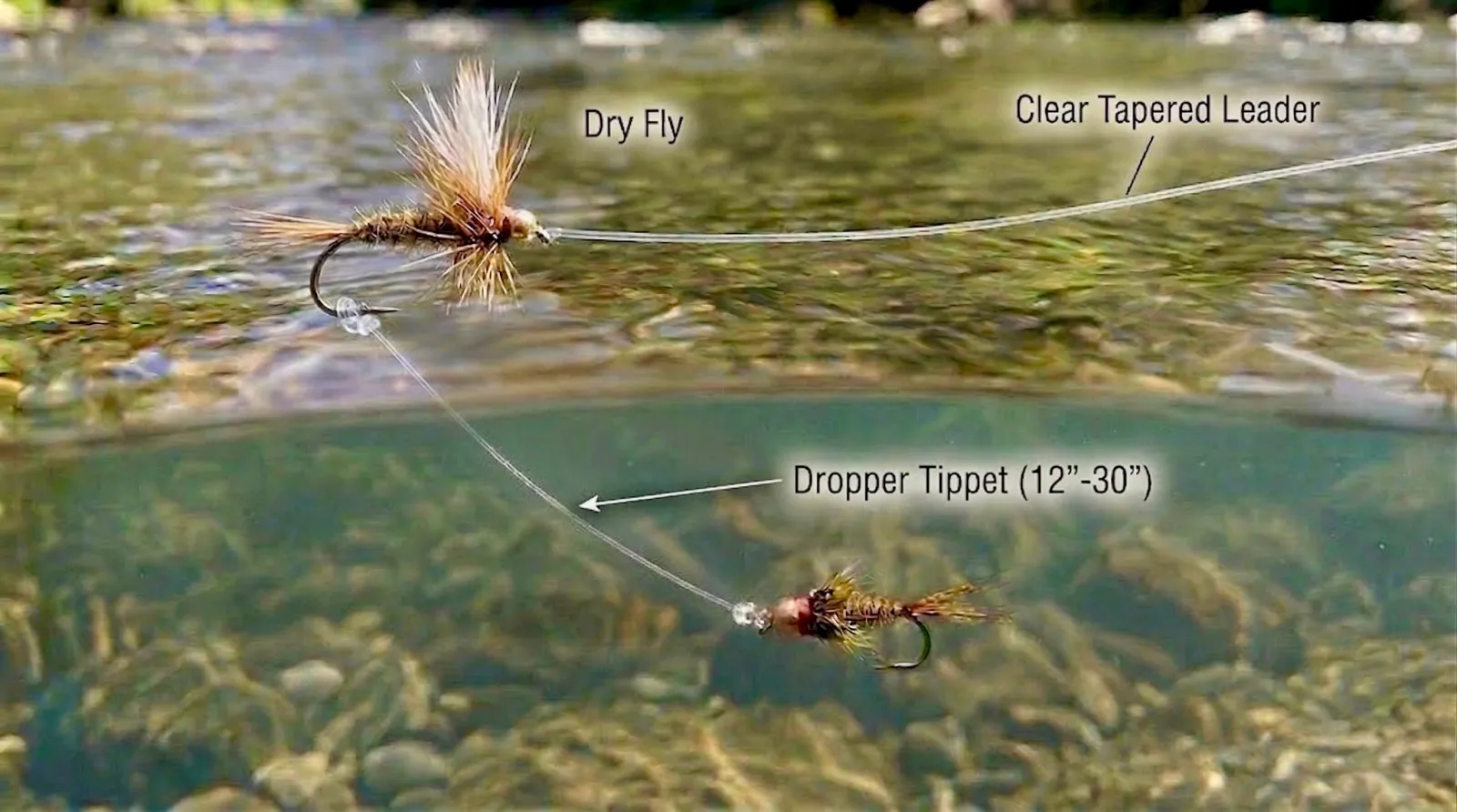
Written by Cameron Spanos
The dry dropper rig setup is one of the most effective — and honestly most fun — ways to fish a trout stream. You get a buoyant dry fly riding on the surface and a weighted nymph hanging below it, covering two feeding zones at once. It's simple in concept, deadly in practice, and once you've caught a fish on the dropper while watching your dry fly disappear, you'll fish it constantly. This guide walks you through everything you need: gear, knots, fly choices, casting, and strike detection.
What Is a Dry Dropper Rig (And Why It Works So Well)?
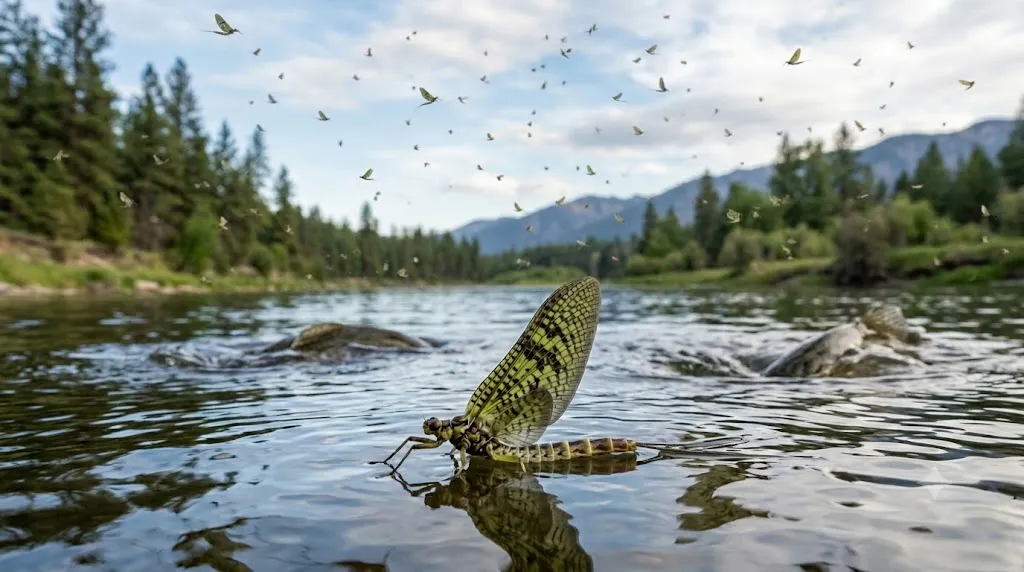
A dry dropper rig is exactly what it sounds like: a buoyant dry fly on the surface with a nymph tied off the bend of the dry fly hook, hanging 12 to 30 inches below. The dry fly does double duty — it imitates a surface food source and acts as a visual strike indicator for the nymph.
Here's why it works so well: trout feed subsurface roughly 80 to 90 percent of the time. That means your dry fly might look great, but the dropper nymph is usually doing the heavy lifting. At the same time, if a trout does key on something at the surface, your dry fly is right there. Two flies, two feeding zones, one cast.
What You Need Before You Start
Rod, Line, and Leader
A 9-foot, 4 or 5-weight rod is the standard for dry dropper fishing. It gives you enough length for easy mending and enough flex to protect light tippet on the hookset. Pair it with a weight-forward floating line and a 9-foot tapered leader. My go to size in a leader is either 4X or 5X.
Tippet Material
Use fluorocarbon for your dropper section. Fluorocarbon sinks faster than nylon monofilament, which gets your nymph into the feeding zone quicker and keeps it there. It's also less visible underwater, which matters in clear, low water. Start with 5X — it's a good balance of strength and diameter for most nymph sizes. You can go 4X for larger nymphs and 6x for smaller ones.
Floatant
Pick up a gel floatant like Loon Aquel or Orvis Hy-Flote. Apply it to the dry fly after you've finished rigging — coating it before you tie on the dropper tippet makes knot-tying slippery and messy.
How to Set Up a Dry Dropper Rig Step by Step
Step 1 — Tie On the Dry Fly
Start by tying your dry fly directly to the end of your leader using an improved clinch knot. For dry droppers, you want a fly that floats all day without constant reapplication — foam-bodied flies like a Chubby Chernobyl or a size 10–14 Stimulator are excellent choices. The dry fly needs to be buoyant enough to support the weight of the nymph below it. If it's riding low or struggling, go bigger or switch to a foam pattern.
Step 2 — Attach the Dropper Tippet
Cut a section of 5X fluorocarbon — 12 to 18 inches for shallow riffles, 20 to 30 inches for deeper runs. Tie one end directly to the bend of the dry fly hook using an improved clinch knot. Some anglers prefer to tie the tippet to the eye, but attaching to the bend keeps the dry fly riding correctly and reduces the chance of fouling. Make sure your dropper tippet is one X finer than your leader — so if you're running a 4X leader, use 5X dropper tippet.
Step 3 — Tie On the Nymph
Tie your nymph to the free end of the dropper tippet using an improved clinch knot or a Davy knot. Tungsten beadhead nymphs are the right call here — tungsten sinks significantly faster than brass, which means your fly gets into the strike zone fast and stays there through the drift. Stick with sizes 14 to 18 and keep the bead small (3/32 inch or smaller) to avoid overpowering the dry fly.
Choosing the Right Flies
Best Dry Flies for the Top
Your dry fly needs to float high and stay visible. These are the go-to patterns:
- Chubby Chernobyl — foam body, floats all day, easy to see, can support heavier nymphs
- Parachute Adams — classic all-around dry, highly visible parachute post, size 12–16
- Stimulator — great attractor pattern, good for fast pocket water
- Hopper patterns — deadly in late summer when grasshoppers are active near the banks
Apply floatant to the body and legs of your dry fly before the first cast. Reapply any time the fly starts to ride low. You can browse matching patterns by type in the Bushwhack fly pattern library.
Best Nymphs for the Dropper
Tungsten beadheads are your best option. These combos consistently produce fish:
- Copper John under a Chubby Chernobyl — a classic pairing, fast-sinking, visible
- Pheasant Tail Nymph under a Parachute Adams — natural profile, works on selective trout
- Perdigon under a hopper pattern — slim profile, cuts through current fast
- Hare's Ear under a Stimulator — buggy, general imitation that works everywhere
Match the nymph size to the hatch if you know what's in the water. When in doubt, a size 16 Pheasant Tail or Copper John will produce fish on most streams.
How to Cast a Dry Dropper Without Tangles
Open Your Loop
The number one cause of tangles with a dry dropper rig is a tight, fast casting stroke. Slow down your cast and let the loop open up slightly. A soft, open loop gives both flies room to turn over without colliding mid-air. Think of it as lobbing the rig rather than snapping it.
Shorten the Dropper if Tangles Persist
If you're still getting wrap-ups, shorten your dropper tippet down to 14 to 16 inches. You sacrifice a little depth, but you'll eliminate most tangle issues while you dial in your casting stroke.
Use a Roll Cast in Tight Spots
When you're fishing tight brushy water with no room for a backcast, the roll cast is your best friend with a dry dropper rig. It eliminates the risk of the flies colliding on the backcast entirely. Practice it — it's one of the most useful casts in all of fly fishing.
How to Detect Strikes on the Dropper
The Dry Fly Dives — Set Immediately
This is the easiest strike to read. When a trout takes the nymph, the dry fly gets pulled underwater quickly and decisively. As soon as you see it go down, lift the rod. Don't hesitate — trout spit nymphs fast.
The Dry Fly Hesitates or Moves Unnaturally
Subtle takes are harder to catch. Sometimes a trout picks up the nymph gently and the dry fly just pauses, twitches sideways, or bobs unexpectedly. Train yourself to set on any unnatural movement from the dry fly — you'll miss a few at first, but you'll quickly learn what a real take looks like versus current turbulence.
Maintain a Drag-Free Drift
Drag is the enemy of this rig. If your dry fly is dragging across the current, your nymph is doing the same thing — and trout will refuse it. After the cast, mend your line upstream immediately to eliminate slack and keep the rig drifting naturally at the speed of the current. A good drift catches more fish than a perfect fly.
Dry Dropper vs. Strike Indicator — Which Should Beginners Use?
When to Use a Dry Dropper
The dry dropper rig setup shines in these conditions:
- Water 1 to 4 feet deep with moderate current
- During hatch season or when terrestrials (hoppers, ants, beetles) are active
- Clear, low water where a bright indicator might spook fish
- Any time trout are showing interest near the surface
When to Stick With an Indicator
An indicator rig outperforms the dry dropper in a few specific situations:
- Deep runs over 4 feet — the dry fly can't suspend a nymph that deep effectively
- Fast, heavy water where it's hard to control a long dropper
- Cold-water winter nymphing when fish are holding deep and slow
Both rigs have their place. Start with a dry dropper on your local tailwater or freestone stream and switch to an indicator when conditions push fish deeper.
FAQs About Dry Dropper Rigs
How long should the dropper tippet be?
Start with 18 inches as a baseline. Go shorter (12 to 14 inches) for shallow riffles and longer (20 to 30 inches) for deeper pools and runs.
What is the best dry fly to use as an indicator?
A Chubby Chernobyl is the top choice — it floats all day, supports heavier nymphs, and is easy to track on the water. Parachute patterns are the best alternative for selective fish.
How do you cast without tangling?
Open your loop, slow your stroke, and keep the dropper no longer than 20 inches while you're learning. A roll cast eliminates most tangle problems in tight spots.
What nymphs work best?
Tungsten beadhead nymphs in sizes 14 to 18 are your best bet. Copper John, Pheasant Tail, Perdigon, and Hare's Ear cover most situations on any trout stream.
When should I use it vs an indicator?
Use a dry dropper in water under 4 feet deep with moderate current. Switch to an indicator for deep, fast, or cold water where you need more precise depth control.
Can you fish it in fast water?
Yes, but keep the dropper short (12 to 16 inches) and use a heavier tungsten bead to get the nymph down quickly. Foam dry flies handle fast water best.
Start Simple, Adjust From There
The dry dropper rig doesn't need to be complicated. Start with a Chubby Chernobyl on top, a size 16 Copper John on 18 inches of 5X fluorocarbon below it, and improved clinch knots throughout. That setup will catch trout on nearly any stream in the country.
Once you're comfortable with the basics, start experimenting — adjust dropper length to match depth, swap nymphs to match local hatches, and try the surgeon's knot tag method when you want a cleaner rig. Every adjustment teaches you something about how trout are feeding that day.
Track what's working as you go. Log your fly combos, dropper lengths, and water conditions in the Bushwhack fishing log so you can look back and see patterns over time. You can also explore new dropper nymph options in the Bushwhack fly library or check your gear and session history any time on your Bushwhack dashboard.
The dry dropper is one of those rigs that keeps rewarding you the more time you put into it. Get it on the water and let the trout do the teaching.