Best Fly Fishing Waders for 2026: From First-Timer to Full-Season Wade Angler
 Cameron Spanos
Written by Cameron Spanos
Picking the best fly fishing waders is one of the most important gear decisions you'll make. Too thin and you're soaked and cold. Too expensive and you've blown your budget before buying boots or a rod. This guide covers five real, tested picks for 2026 — from true budget options under $100 to guide-grade waders built for years of hard use — with real Amazon links so you can buy in two clicks.
Quick Picks: Best Fly Fishing Waders 2026
| Product | Best For | Price Range | Rating |
|---|---|---|---|
| Frogg Toggs Canyon II | Best budget / beginners | $80–$100 | 4/5 |
| Redington Escape | Best value under $200 | $130–$160 | 4.5/5 |
| Simms Tributary | Best mid-range | $200–$250 | 4.5/5 |
| Simms Freestone | Best step-up / serious anglers | $300–$380 | 4.5/5 |
| Orvis Pro Wader | Best premium | $500–$600 | 5/5 |
1. Frogg Toggs Canyon II — Best Budget Fly Fishing Waders
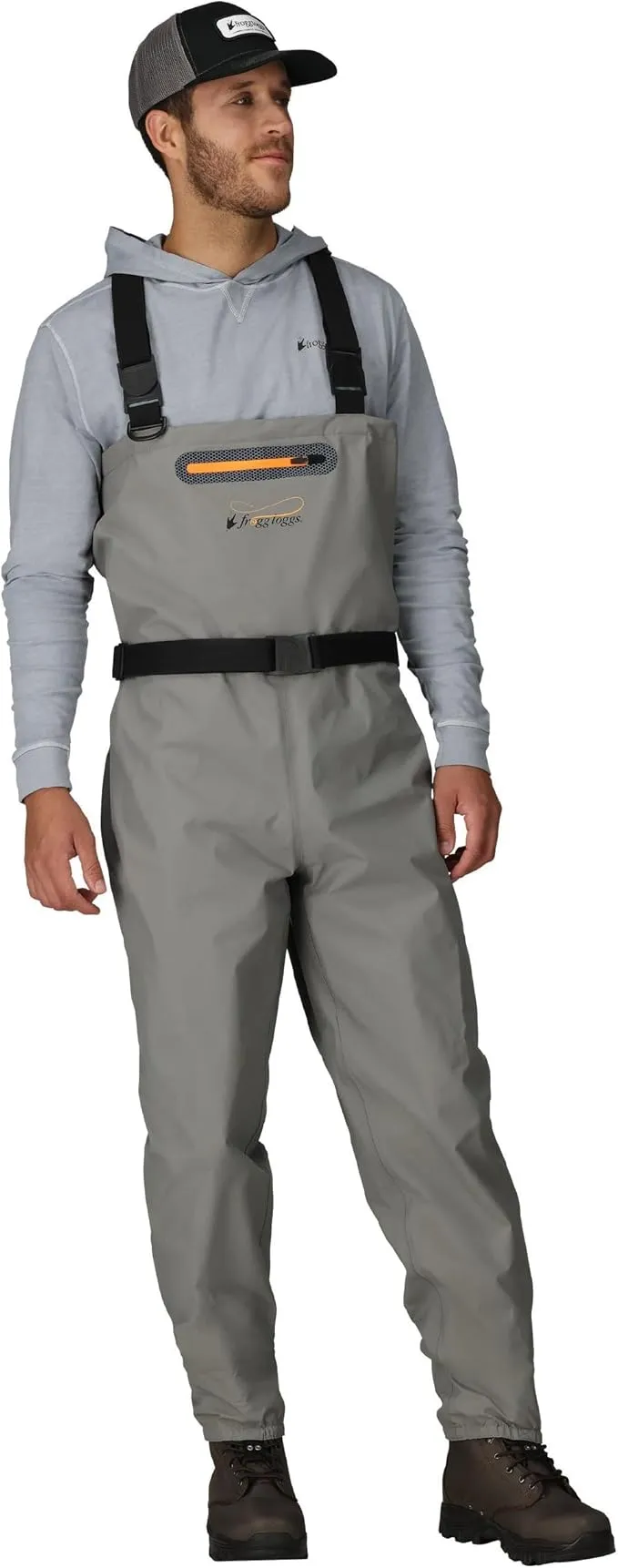
If you're just getting started or fish a handful of days a season, the Frogg Toggs Canyon II is hard to argue with at under $100. These use a 4-ply nylon upper with 4mm double-taped neoprene stockingfeet — the same construction you'll find in waders costing twice as much. They won't last a decade of hard guiding, but for casual use they hold up well and the price means you don't stress about every rock scramble.
Who It's For
- Beginners testing whether wading is for them
- Anglers who fish fewer than 15–20 days per year
- Backup or travel waders
Pros & Cons
- Pro: Genuinely the cheapest breathable stockingfoot wader worth buying
- Pro: Lightweight and packable
- Con: Seams near the booties can weaken over time with hard use
- Con: Limited features — no handwarmer pockets, minimal storage
2. Redington Escape — Best Fly Fishing Waders Under $200
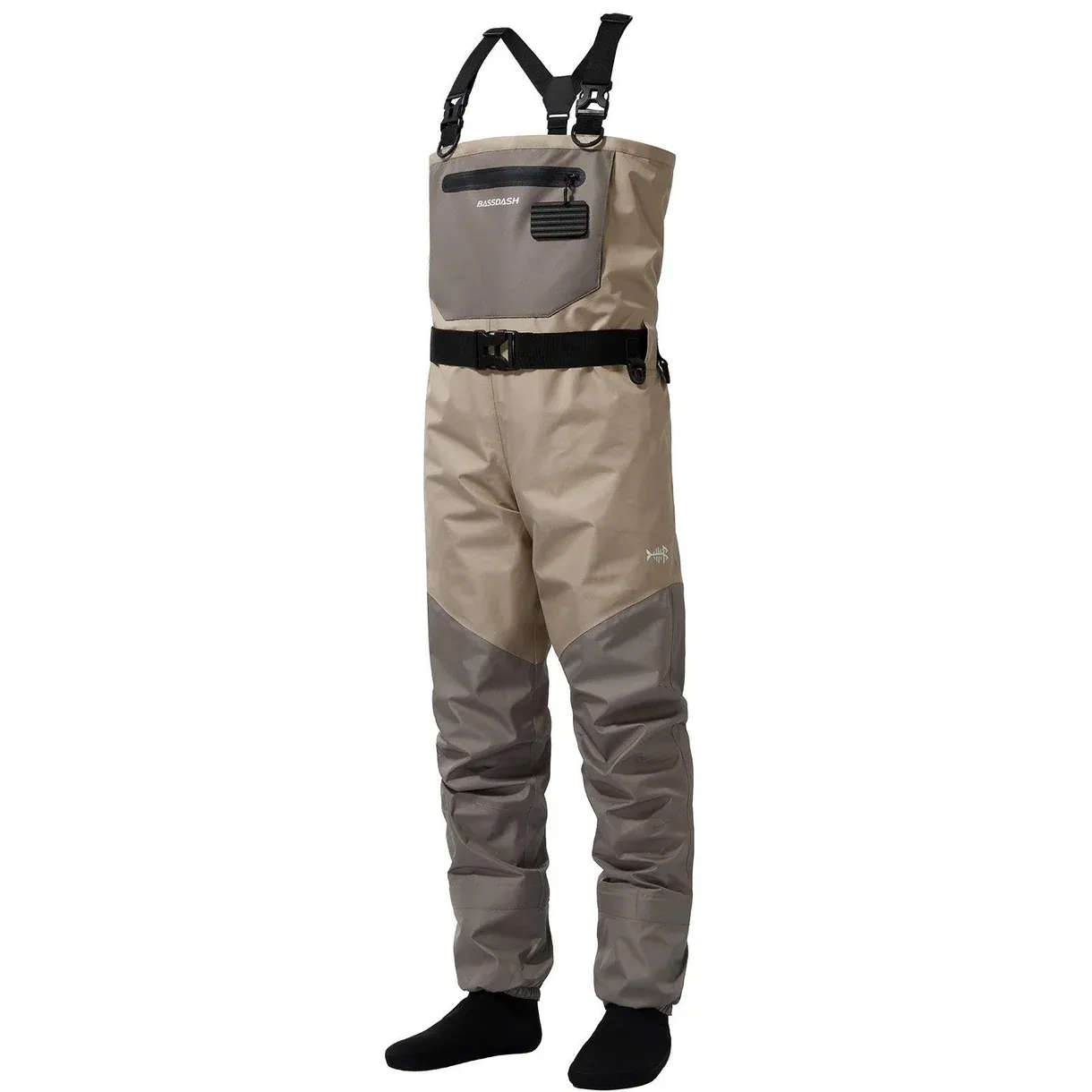
Redington is the sweet spot between budget and brand name, and the Escape Waders are their entry-level chest wader done right. Four-layer waterproof breathable construction, reinforced knees and seat, and a lifetime warranty on manufacturing defects. That warranty alone separates Redington from the true budget tier.
Who It's For
- Anglers fishing 20–40 days a year who want real durability without Simms prices
- Beginners who want a wader they can grow into
- Anyone who values warranty coverage
Pros & Cons
- Pro: Lifetime manufacturing defects warranty
- Pro: 4-layer construction is noticeably more durable than budget waders
- Con: Fit can run a bit boxy — try before you buy if possible
- Con: Fewer pockets than mid-range competitors
3. Simms Tributary — Best Mid-Range Fly Fishing Waders
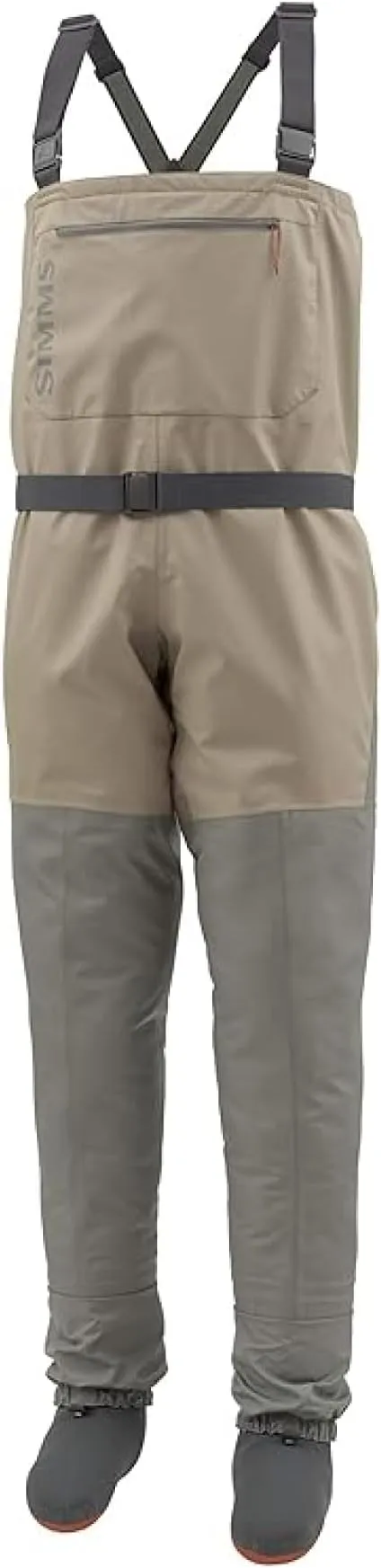
Simms built a reputation on the professional guide market, and the Tributary is their entry point into that lineage. You get a 3-layer upper paired with a more robust 4-layer lower where you need it most, anatomically designed neoprene stockingfeet, and convertible chest-to-waist configuration via adjustable suspenders. The 60-day replacement policy is also a nice safety net.
Who It's For
- Anglers fishing 30–50+ days a year who want Simms quality without the premium price tag
- Anyone upgrading from a budget wader for the first time
- Cold-weather fishing — excellent in below-freezing temps
Pros & Cons
- Pro: Real Simms build quality at a fraction of the G4 Pro price
- Pro: Convertible chest/waist-high design for warm days
- Con: Pricier than Redington at a similar durability tier
- Con: Not as breathable as the Freestone or G3 in hot weather
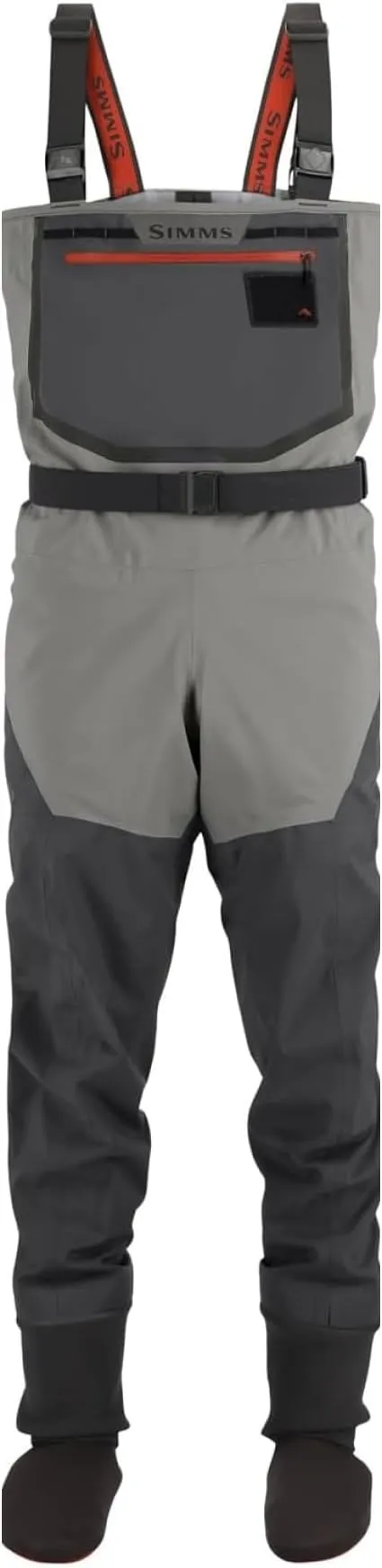
4. Simms Freestone — Best Waders for Serious Anglers
The Simms Freestone uses Toray QuadraLam 4-layer fabric throughout — a step up from the Tributary in both breathability and abrasion resistance. Reinforced knees and seat, gravel guards, anatomic neoprene booties, and a storage layout that actually makes sense on the water. If you fish more than 50 days a year, the Freestone is where it starts to make economic sense to spend more now and replace less often.
Who It's For
- Frequent anglers (50+ days/year) who see this as long-term gear
- Anglers in brushy, rocky, or technical terrain who need abrasion resistance
- Anyone who's replaced budget waders twice already
Pros & Cons
- Pro: QuadraLam fabric is noticeably more breathable and durable
- Pro: Purpose-built features (gravel guards, better pocket layout)
- Con: Price jump from the Tributary is real
- Con: Overkill for casual anglers
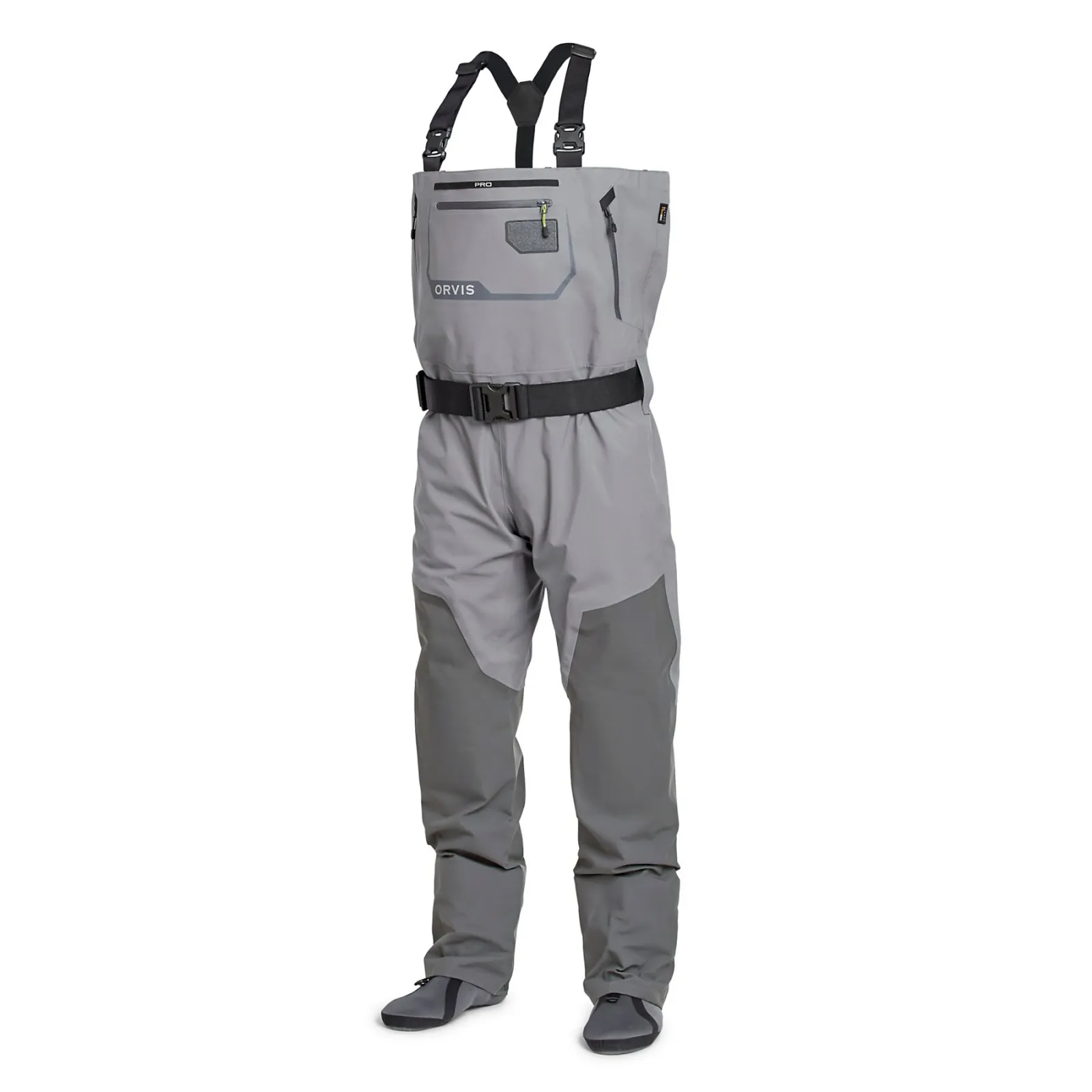
5. Orvis Pro Wader — Best Premium Fly Fishing Waders
The Orvis Pro Wader uses proprietary 4-layer Cordura fabric and is built for the angler who goes to any extreme to find fish. The athletic fit, rubberized tool docking on suspenders, fleece-lined handwarmer pockets with YKK AquaGuard zippers, and obsessive attention to fit details make these the wader to reach for when you're on the water every day. At around 48 oz they balance durability and weight better than most in this tier.
Who It's For
- Guides, professionals, or anglers who fish 80–100+ days a year
- Anglers fishing demanding conditions — big rivers, brushy access, cold weather
- Anyone who wants one pair of waders to last 5+ years
Pros & Cons
- Pro: Best-in-class fit and feature set
- Pro: 4-layer Cordura holds up to years of hard use
- Con: Expensive — hard to justify unless you fish constantly
- Con: Athletic cut isn't for everyone; size carefully
Fly Fishing Wader Buying Guide: What Actually Matters
Breathable vs. Neoprene
For most trout fishing from spring through fall, breathable waders are the right choice. They release body heat and moisture, keeping you comfortable during long days and hikes to the water. Neoprene excels in true winter fishing — below-freezing water temps where insulation matters more than breathability. Most anglers fishing three seasons will be happiest with a breathable wader layered with appropriate base layers.
Stockingfoot vs. Bootfoot
Stockingfoot waders are the standard for fly fishing. You pair them with a separate wading boot, giving you better ankle support, grip sole options (rubber or felt depending on your state's regulations), and a more natural walking feel for technical wading. Bootfoot waders are easier to get on and off but sacrifice mobility — fine for duck hunting or standing in one spot, but not ideal for covering water on a trout stream.
Layer Count Matters
Budget waders typically use 3-ply construction. Mid-range and premium use 4-layer or above. More layers means more durability and usually better breathability, but also more cost. The seams are equally important — look for fully taped seams throughout, not just at stress points.
Fit: Don't Skip This Step
Waders that fit poorly are miserable. Look for a fit chart that accounts for height, waist, inseam, and boot size separately. If you're between sizes, go up — you want room to layer underneath in cold weather. Use Bushwhack to track your gear and log which gear you used on each trip, so you can compare across conditions.
Our Pick: Best Fly Fishing Waders for Most Anglers
For most people reading this — anglers fishing somewhere between 10 and 50 days a year — the Redington Escape hits the sweet spot. It's built better than anything in the budget tier, backed by a lifetime warranty, and won't break the bank before you've bought boots. Step up to the Simms Tributary when you know you're serious about wading, and consider the Simms Freestone when you're fishing hard enough that gear cost-per-day actually pencils out. Whatever you choose, log your days on Bushwhack — tracking wear patterns and conditions will help you buy smarter next time.