Matching the Hatch in Spring: April and May Trout Hatches
 Cameron Spanos
Written by Cameron Spanos
You're standing knee-deep in a cold April run. Trout are rising confidently — dimples spreading across the flat above the riffle — and you can see something in the air, a pale flicker of wings catching the overcast light. But nothing is eating your fly. You change patterns. Still nothing. The fish keep rising. This is matching the hatch fly fishing spring at its most humbling, and most exciting.
The good news: hatch matching is a learnable skill. Better yet, it's a repeatable system you can improve year over year. This guide covers the three core April and May hatches you need to know, how to pick the right fly for each, what to do when hatches overlap, and how to start logging your observations so next spring, you already know the answers.
Understanding the Spring Hatch Window
Spring is the most complex and rewarding hatch period of the year. As water temperatures climb out of the low 40s, trout that have been slow and lethargic through winter suddenly shift into active feeding mode — and the river's insect population responds in kind.
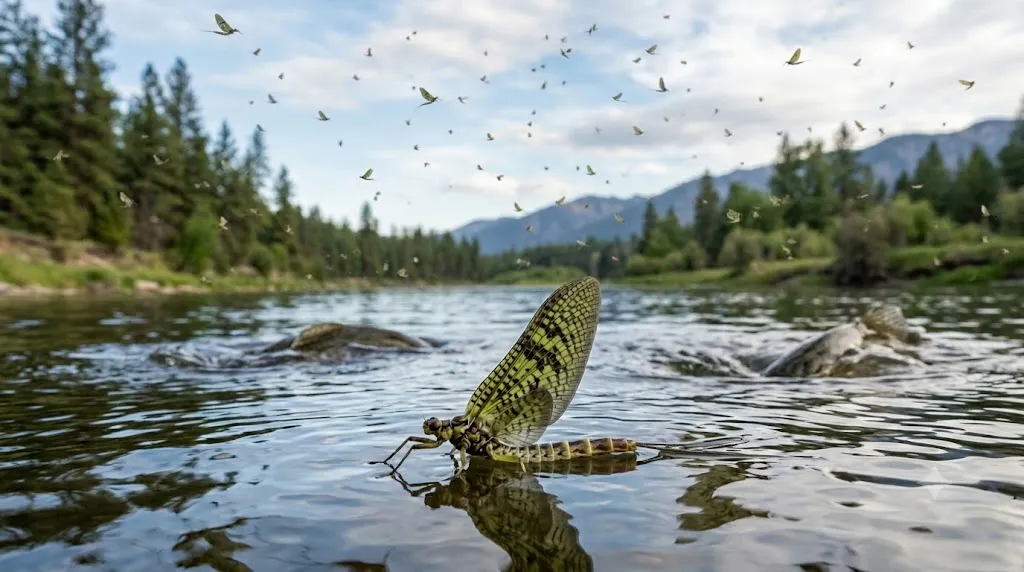
The progression matters. Blue-Winged Olives (BWOs) are typically the first significant mayfly hatch of the season, emerging on overcast, drizzly days that would send most anglers home. Next come Quill Gordons and Blue Quills, signaling that spring is firmly underway. By late April and into May, Sulphur hatches begin — often the most anticipated dry-fly event of the entire year.
Water temperature is the key trigger throughout. March Brown emergence, for example, is reliably kicked off when water temperatures hold above 42°F for several consecutive days. A stream thermometer isn't a luxury — it's one of the most useful tools in your vest.
The Big Three Spring Hatches: Identification and Fly Selection
Blue-Winged Olive Hatch
The Blue-Winged Olive hatch is the marquee early-season event for trout anglers across the country. BWOs are small mayflies — typically size 18 to 22 — with slate-gray wings and an olive-tinged body. What makes them unique is their preference for foul weather: gray skies, light rain, and even light snow can trigger explosive hatches.
For fly selection, your core BWO box should include:
- Parachute Adams (size 18–20) — the all-around dry fly that matches the general profile of an emerging BWO
- RS2 or Pheasant Tail nymph — effective during the early emergence when fish are taking nymphs just below the surface
- CDC Emerger or Sparkle Dun — deadly when fish are sipping in the film and ignoring high-riding dries
- Blue-Winged Olive Comparadun — a low-profile, flush-riding pattern for selective fish on slow water
When trout are rising but refuse your dry fly, drop to a size smaller and consider switching to an emerger pattern. Fish in smooth water are often keying on the insect in the surface film, not on top of it.
Quill Gordon Hatch
The Quill Gordon is a classic eastern hatch, and one of the early-season dry-fly opportunities that gets anglers excited to be on the water. These are larger mayflies — typically size 12 to 14 — with mottled wings and a pale creamy body with darker banding. They hatch in early afternoon on warmer spring days, often in riffled water.
Key patterns for the Quill Gordon hatch include the traditional Quill Gordon dry fly (tied with stripped peacock quill for that distinctive segmented body), a March Brown wet fly swung across the current, and a Hare's Ear nymph worked through the riffles ahead of the hatch. Pay attention to seams between riffles and flat water — that's where fish will stack up to intercept emerging insects.
Sulphur Hatch Fly Fishing
Sulphur hatch fly fishing is what many eastern dry-fly anglers live for. Sulphurs start hatching in late April and can continue into June, with the most reliable evening hatches occurring in May. One detail that trips up beginners: Sulphur mayflies include four species in the East and two in the West, and males and females differ significantly in color. Males are a rich orange-yellow; females are a paler sulfur-yellow. The fish notice this difference.
Top Sulphur patterns include:
- Sulphur Comparadun or Sparkle Dun (size 16–18) — the workhorse
- Sulphur Parachute — easy to see in low evening light
- CDC Sulphur Emerger — when fish are sipping in the film
- Pale Evening Dun — matches the female coloration on selective fish
Evening Sulphur hatches often overlap with spinner falls. If fish are rising rhythmically but ignoring your emerger, switch to a spent-wing spinner pattern flat on the water.
When Hatches Overlap: Staying Flexible
Spring's abundance is also its challenge. In mid-May, it's entirely possible to have BWOs coming off in the morning, Sulphurs beginning in the afternoon, and a Caddis hatch firing at dusk — all on the same stretch of river. Fish may be keying on one insect to the exclusion of all others, or they may be opportunistically feeding on whatever is most available.
When spring fly fishing hatches overlap, observation beats guessing. Spend five minutes watching before you cast. Look for the size and color of the natural insects in the air and on the water. Watch the rise form — a slashing rise often indicates a subsurface take; a quiet ring suggests a sipping fish taking in the film. Net a few naturals from the surface if you can. Match size first, color second, and silhouette third.
Carry a small compartment box with emergers, dries, and spinners for each major hatch. The ability to shift between life stages quickly is often more important than having the perfect pattern.
From Field Craft to System: Logging Hatches in a Fishing App
Here's the honest truth about hatch matching: no guide, chart, or article can tell you exactly when your local stream will produce. Regional hatch calendars are a starting point, not a guarantee. The anglers who consistently crack the code are the ones who build a fly fishing hatch calendar based on their own observations, their own water, their own conditions.
That's where logging comes in. Apps like Bushwhack make it simple to attach hatch observations to a specific trip log — noting what was hatching, what fly worked, water temperature, time of day, and conditions. Over two or three seasons, patterns emerge that no generic fly fishing hatch calendar will show you.
Frequently Asked Questions
What flies should I use during a Blue-Winged Olive hatch?
Start with a Parachute Adams or Comparadun in size 18–20. If fish are refusing, drop to a CDC emerger or RS2 in the same size.
What is the difference between a Quill Gordon and a Hendrickson?
Quill Gordons hatch earlier and have mottled wings with a pale segmented body. Hendricksons follow later and are slightly larger with a pinkish-tan body.
How do I match the hatch as a beginner fly fisher?
Focus on size first. Match what you see, then approximate color. Keep it simple early.
How do I build a personal hatch calendar?
Log every trip: date, location, water temperature, hatch, and what worked. Over time, patterns will emerge.
Get on the Water and Start Logging
The spring hatch window is short, intense, and completely worth it. Every trip is a chance to learn something that will make you better next spring.
Open Bushwhack before you head out, and log what you find. The data you collect this season is an investment in every season that follows.